
Built to Automate & Scale Your Operations
Answer a couple of questions and we'll connect you with the right team member.
Answer a couple of questions and we'll connect you with the right team member.


.avif)
Of Operators Are Centralizing Leasing
Are Planning On Centralizing Renewals
Have Already Centralized Accounts Receivable
Property management companies around the United States are currently facing a wide variety of challenges as a result of technological advancements, changing consumer preferences, and larger macroeconomic pressures. White hot rental markets, high renter expectations, and staff shortages are all combining to put an immense amount of strain on the traditional property management model, and it’s not responding well to the pressure.
We’ve spoken to a wide variety of operators about what procedural changes they’re attempting to implement in order to get a handle on the situation, and one theme that keeps coming up is the desire for increased centralization of their property management operations.

Today, we’ll dive into 5 major reasons driving operators to adopt centralized models, as well as obstacles to implementation, change management best practices, and learnings from EliseAI customers who have successfully centralized their operations.

The property management industry has been suffering through an employee turnover crisis over the last few years, with or higher on average for on-site staff. What is causing this attrition? In general, it’s because on-site teams are overworked, stuck using dated technology, and forced to handle a wide variety of tasks that don’t fit their skill sets or areas of interest. For many property management companies, the answer to solving these employee experience issues is increased centralization.
Centralization improves turnover rates by offering high-performing employees opportunities for professional development and specialization, while shifting repetitive or administrative tasks away from on-site teams to dedicated off-site staff.
Take, for example, a high-performing on-site leasing specialist. If they lease up an entire building too quickly, they’ve essentially worked themselves out of a job. Their options are limited: move to another property or step into an on-site leadership role. But roles like assistant community manager often demand a completely different skill set—focusing more on financial reporting and maintenance coordination than on the sales acumen that made them successful in the first place.
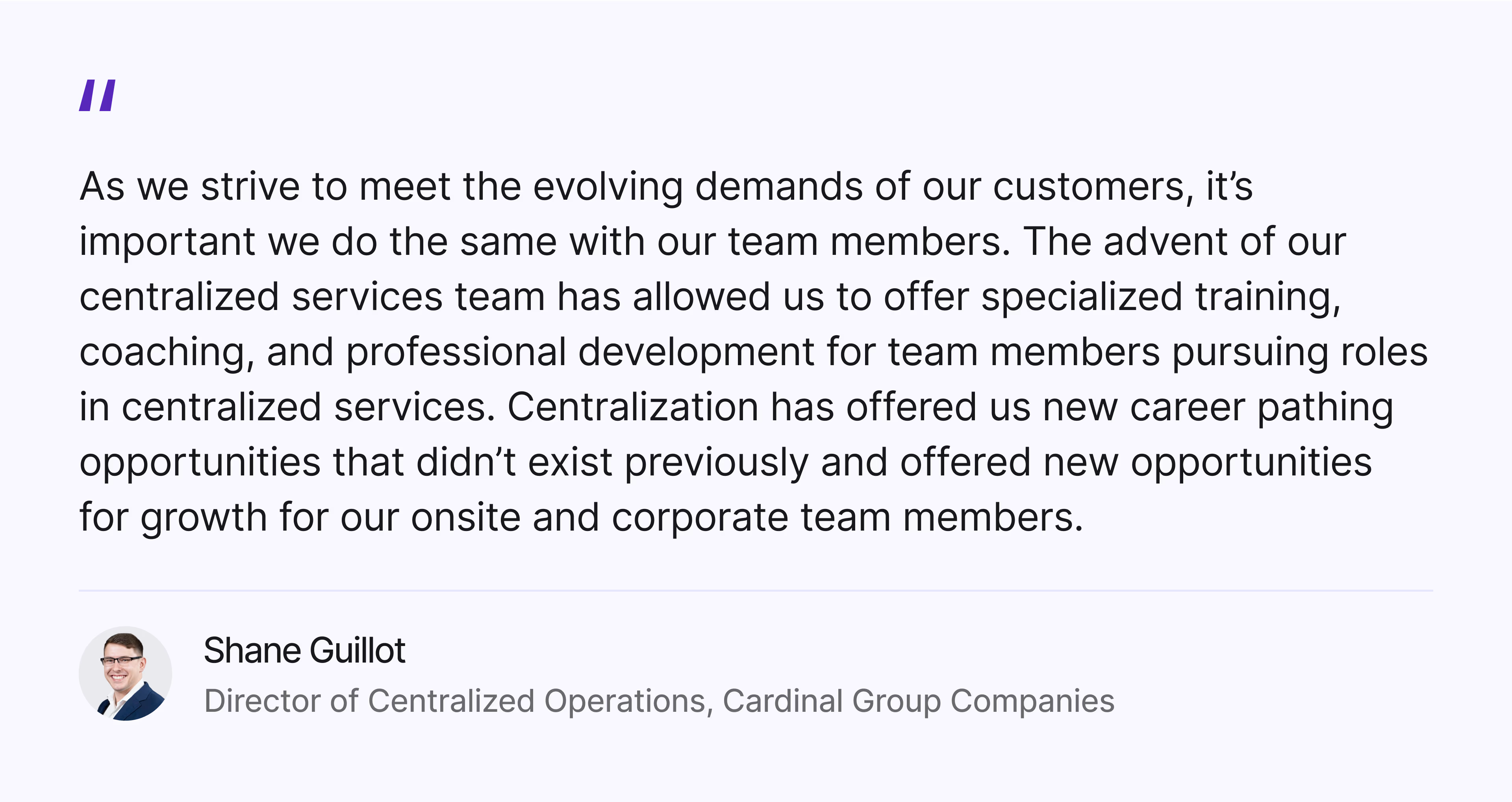
A centralized operating model opens up new, more strategic career paths. That same leasing specialist can transition into a centralized leasing team, allowing them to continue doing what they do best—selling—but at scale. Instead of facing a capped career progression or leaving for another company, they’re given the opportunity to specialize, develop, and grow.
At the same time, on-site team members who prefer community-facing roles benefit from this shift. With off-site teams now handling tasks like rent collection, inbound communication, and property-level accounting, on-site staff can focus solely on creating exceptional in-person experiences for residents and prospects—making their work more impactful and more fulfilling.
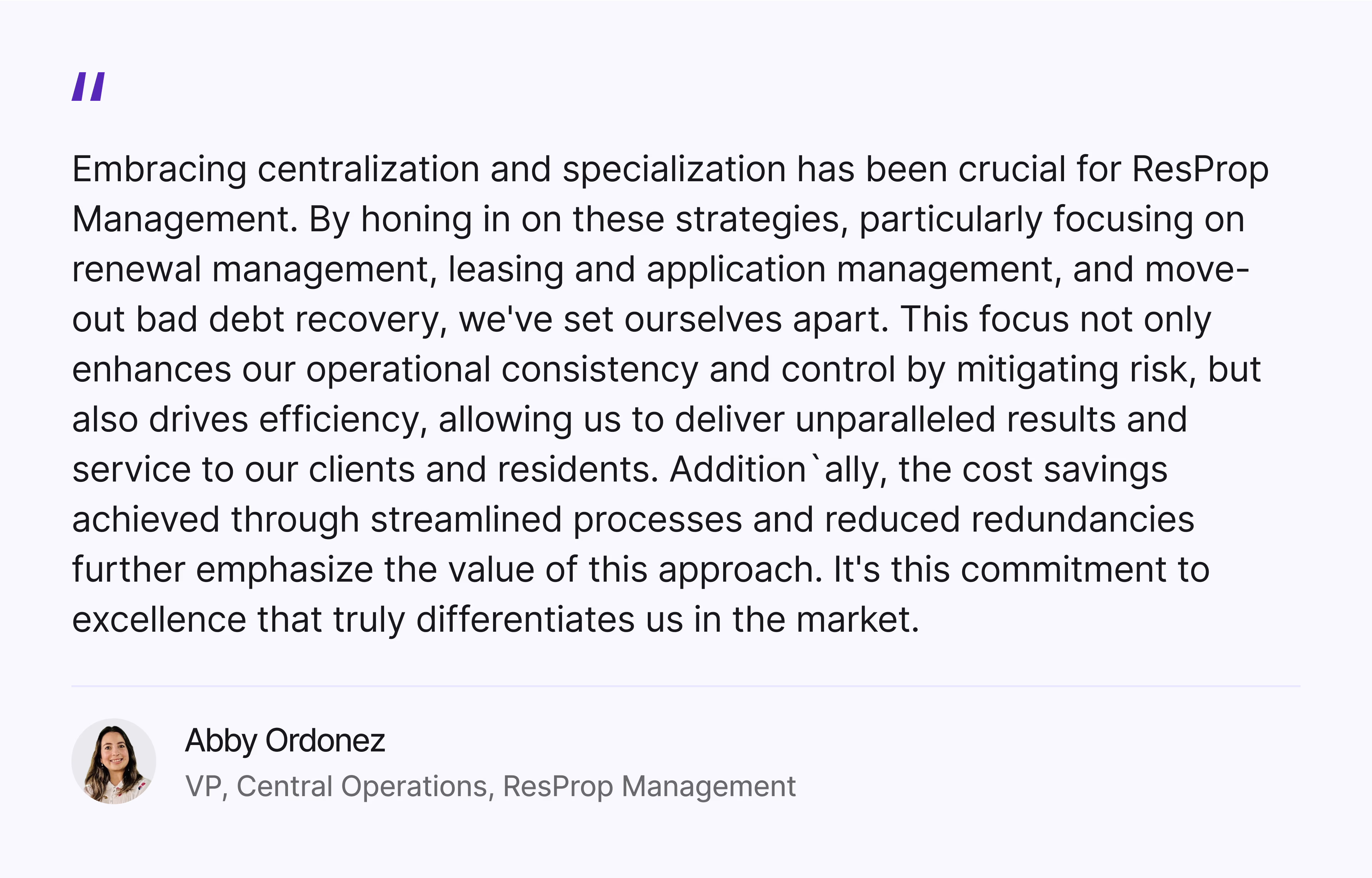
The traditional property management model often fails to deliver consistently positive experiences for residents and prospects. At the heart of this issue is poor responsiveness—messages from renters and leads frequently go unanswered by on-site teams overwhelmed by the volume of tasks and communication they’re expected to handle.
A major contributor to this breakdown is the “jack of all trades, master of none” setup common in many communities. While certain team members, like leasing specialists or maintenance staff, technically have defined roles, in practice they are often pulled into handling escalations and administrative responsibilities that fall outside their job descriptions. This multitasking leads to critical messages being missed, delayed, or forgotten.
A centralized model offers a clear solution. By assigning dedicated off-site teams to manage inbound communications, operators can significantly increase responsiveness and improve the resident and prospect experience. On-site leasing agents, for example, can focus entirely on delivering exceptional property tours and in-person interactions, instead of juggling CRM management or fielding constant emails and messages.
Meanwhile, off-site leasing and resident services teams are evaluated based on response times and message quality, aligning their performance directly with customer satisfaction. This structure allows responsibilities to be clearly defined and executed with greater precision—ensuring every touchpoint with residents and prospects is managed by someone focused entirely on doing it well.
Standardization is essential for compliance, operational efficiency, and scalable growth. Take affordable housing as an example: when communicating acceptance, rejection, or renewal decisions to prospects, messages must be delivered in a uniform, compliant manner every time to mitigate liability and uphold fair housing standards. Centralization is a powerful tool for driving this kind of consistency. By assigning specific responsibilities to highly trained and closely monitored off-site teams, operators can ensure critical tasks are handled uniformly across every property. Whether it’s sending lease documents, processing renewals, or communicating qualification criteria, centralized teams make standardization achievable at scale.

But the benefits don’t stop there. Centralization also delivers substantial gains in efficiency and value. A prime example is financial reporting. When this function is moved to a centralized team, companies can train specialists to handle these sensitive deliverables with greater accuracy and consistency. This not only meets a core client expectation for timely, error-free reporting, but also reflects positively on the management company’s overall service quality. The same logic applies to other responsibilities like rent collection, where focused, off-site teams can continuously refine their skills and processes.Still, change doesn’t come easy in property management. Many communities fall back on “that’s how we’ve always done it” as a justification for resisting new approaches. Encouraging standardization through centralization can be an easier sell to on-site teams—especially when it means offloading some of their least favorite tasks, such as processing rent payments, fielding routine questions, or compiling financial data.
Implementing this shift effectively requires strong change management. One proven approach comes from Jacob Kosior, former VP of Centralized Services at Cardinal, who increased team buy-in by holding feedback sessions across multiple communities. These sessions helped differentiate between process-based critiques and resistance rooted in personal preference. More importantly, they encouraged onsite staff to step outside the mindset of their individual property and consider the broader organizational benefits of a standardized, centralized model.
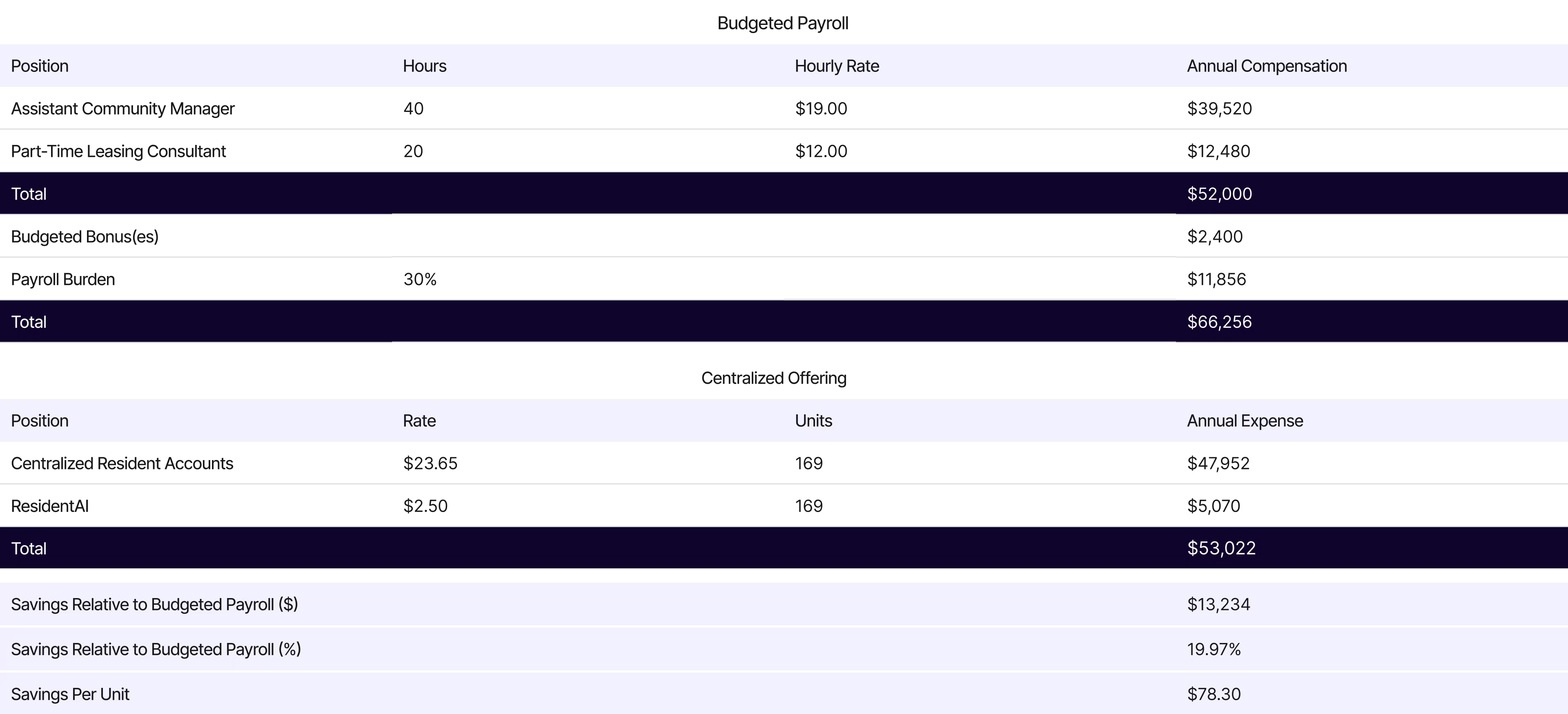
Centralization can be an extremely effective cost reduction method for a property management organization, providing an opportunity to either effectively manage a larger portfolio without adding new staff or eliminating the need to backfill existing openings. Adopting a centralized model allows you to scale the contributions of your off-site team members to a level where they’re able to more efficiently deliver services formerly handled by members of on-site teams at a more favorable rate.Let’s consider the financial impact of not backfilling an Assistant CommunityManager opening and instead handing their responsibilities, including rent collection, monthly financial reporting, and invoice processing, to a centralized team member, using an anonymized example of a real customer’s calculations.
Beyond simply reducing costs, centralization offers the opportunity for property management companies to further their vertical integration efforts and capture more revenue by delivering services at scale across their portfolio. To understand this better, let’s go back to the anonymized model we shared in the last section.
The amount the property manager saved the owner between the salary required by the Assistant Community Manager and the cost to deploy the centralized accounts role represents a potential income stream for the property manager. With an almost 20% margin of cost reduction, the property manager could subsequently adjust the per-unit bill rate they charge property owners for the centralized team member and recapture any additional rate raises as additional revenue. In a business like property management where margins are razor thin, well built and deployed centralized teams represent potential new streams of revenue as they deliver better, standardized services at scale.
With all these driving factors in mind, plus the rapid development of AI technology built specifically to enable centralized teams, it’s no surprise that property management companies both large and small are piloting out centralized service models across their portfolios. What will differentiate operators during this process comes down to a combination of technological adoption and strategy, asdifferent companies will have varying degrees of success in overhauling the way they do business.
The property management industry has been suffering through an employee turnover crisis over the last few years, with or higher on average for on-site staff. What is causing this attrition? In general, it’s because on-site teams are overworked, stuck using dated technology, and forced to handle a wide variety of tasks that don’t fit their skill sets or areas of interest. For many property management companies, the answer to solving these employee experience issues is increased centralization.
Centralization improves turnover rates by offering high-performing employees opportunities for professional development and specialization, while shifting repetitive or administrative tasks away from on-site teams to dedicated off-site staff.
Take, for example, a high-performing on-site leasing specialist. If they lease up an entire building too quickly, they’ve essentially worked themselves out of a job. Their options are limited: move to another property or step into an on-site leadership role. But roles like assistant community manager often demand a completely different skill set—focusing more on financial reporting and maintenance coordination than on the sales acumen that made them successful in the first place.
A centralized operating model opens up new, more strategic career paths. That same leasing specialist can transition into a centralized leasing team, allowing them to continue doing what they do best—selling—but at scale. Instead of facing a capped career progression or leaving for another company, they’re given the opportunity to specialize, develop, and grow.
At the same time, on-site team members who prefer community-facing roles benefit from this shift. With off-site teams now handling tasks like rent collection, inbound communication, and property-level accounting, on-site staff can focus solely on creating exceptional in-person experiences for residents and prospects—making their work more impactful and more fulfilling.
The traditional property management model often fails to deliver consistently positive experiences for residents and prospects. At the heart of this issue is poor responsiveness—messages from renters and leads frequently go unanswered by on-site teams overwhelmed by the volume of tasks and communication they’re expected to handle.
A major contributor to this breakdown is the “jack of all trades, master of none” setup common in many communities. While certain team members, like leasing specialists or maintenance staff, technically have defined roles, in practice they are often pulled into handling escalations and administrative responsibilities that fall outside their job descriptions. This multitasking leads to critical messages being missed, delayed, or forgotten.
A centralized model offers a clear solution. By assigning dedicated off-site teams to manage inbound communications, operators can significantly increase responsiveness and improve the resident and prospect experience. On-site leasing agents, for example, can focus entirely on delivering exceptional property tours and in-person interactions, instead of juggling CRM management or fielding constant emails and messages.
Meanwhile, off-site leasing and resident services teams are evaluated based on response times and message quality, aligning their performance directly with customer satisfaction. This structure allows responsibilities to be clearly defined and executed with greater precision—ensuring every touchpoint with residents and prospects is managed by someone focused entirely on doing it well.
Standardization is essential for compliance, operational efficiency, and scalable growth. Take affordable housing as an example: when communicating acceptance, rejection, or renewal decisions to prospects, messages must be delivered in a uniform, compliant manner every time to mitigate liability and uphold fair housing standards. Centralization is a powerful tool for driving this kind of consistency. By assigning specific responsibilities to highly trained and closely monitored off-site teams, operators can ensure critical tasks are handled uniformly across every property. Whether it’s sending lease documents, processing renewals, or communicating qualification criteria, centralized teams make standardization achievable at scale.
But the benefits don’t stop there. Centralization also delivers substantial gains in efficiency and value. A prime example is financial reporting. When this function is moved to a centralized team, companies can train specialists to handle these sensitive deliverables with greater accuracy and consistency. This not only meets a core client expectation for timely, error-free reporting, but also reflects positively on the management company’s overall service quality. The same logic applies to other responsibilities like rent collection, where focused, off-site teams can continuously refine their skills and processes.Still, change doesn’t come easy in property management. Many communities fall back on “that’s how we’ve always done it” as a justification for resisting new approaches. Encouraging standardization through centralization can be an easier sell to on-site teams—especially when it means offloading some of their least favorite tasks, such as processing rent payments, fielding routine questions, or compiling financial data.
Implementing this shift effectively requires strong change management. One proven approach comes from Jacob Kosior, former VP of Centralized Services at Cardinal, who increased team buy-in by holding feedback sessions across multiple communities. These sessions helped differentiate between process-based critiques and resistance rooted in personal preference. More importantly, they encouraged onsite staff to step outside the mindset of their individual property and consider the broader organizational benefits of a standardized, centralized model.
Centralization can be an extremely effective cost reduction method for a property management organization, providing an opportunity to either effectively manage a larger portfolio without adding new staff or eliminating the need to backfill existing openings. Adopting a centralized model allows you to scale the contributions of your off-site team members to a level where they’re able to more efficiently deliver services formerly handled by members of on-site teams at a more favorable rate.Let’s consider the financial impact of not backfilling an Assistant CommunityManager opening and instead handing their responsibilities, including rent collection, monthly financial reporting, and invoice processing, to a centralized team member, using an anonymized example of a real customer’s calculations.
Beyond simply reducing costs, centralization offers the opportunity for property management companies to further their vertical integration efforts and capture more revenue by delivering services at scale across their portfolio. To understand this better, let’s go back to the anonymized model we shared in the last section.
The amount the property manager saved the owner between the salary required by the Assistant Community Manager and the cost to deploy the centralized accounts role represents a potential income stream for the property manager. With an almost 20% margin of cost reduction, the property manager could subsequently adjust the per-unit bill rate they charge property owners for the centralized team member and recapture any additional rate raises as additional revenue. In a business like property management where margins are razor thin, well built and deployed centralized teams represent potential new streams of revenue as they deliver better, standardized services at scale.


