
Built to Automate & Scale Your Operations
Answer a couple of questions and we'll connect you with the right team member.
Answer a couple of questions and we'll connect you with the right team member.


EliseAI Communities Analyzed
Average Occupancy Delta vs. Non-AI Communities
Average National Occupancy Rate Decrease in 2025
Using a large data panel provided by ALN, the EliseAI Research Team analyzed the overall occupancy rate of 3,763 properties leveraging EliseAI products between 2022 and 2024. Prior to AI launch, the sample of properties showed an average decline in occupancy of ~1% per year, in line with each property's respective market trends. Based on AI launch dates, properties onboarding AI were able to then outperform their markets by 2% in 12 months, countering the downward trend and increasing their gap over non-AI-using properties.

Since the COVID-19 pandemic began in early 2020, the multifamily industry has lived several lives in a short period of time. First, the industry persevered through an initial chill in rental transactions due to government-enforced lockdowns. This stretch gave way to a period of all-time high occupancy rates—cresting at 98% nationwide in the second half of 2021—as new starts and deliveries dropped to historic lows due to those same lockdowns.
Renters, empowered to work remotely, stretched their legs to growing markets like Austin, Denver, and Phoenix. As a result of high demand and low supply during peak pandemic times, nationwide rental prices hit an all-time high.
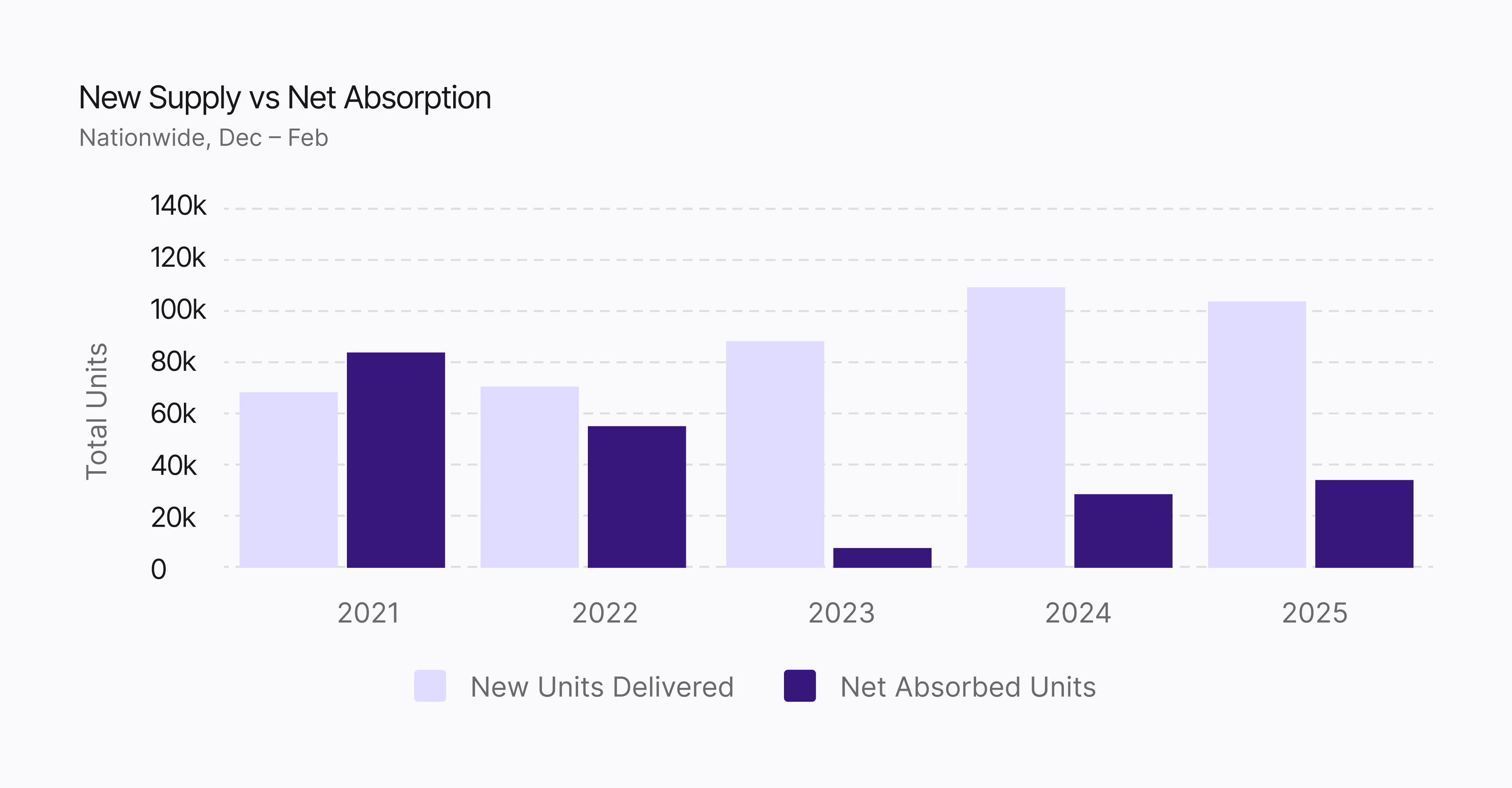
Since that apex in late 2021, occupancy rates have consistently started to decrease alongside rents, as multifamily developers have worked to combat unit shortages in certain markets through increased starts and high delivery numbers. Today, nationwide occupancy rates are below where they were when the pandemic began, as slow unit absorption relative to delivery has resulted in more and more vacancies in markets across the country.

When we step back and look at nationwide occupancy data from the past five years, some trends jump off the page. For one, it’s clear that the pendulum has quickly swung from supply shortages to a glut of supply—particularly in the Sunbelt. While certain Northeastern metropolitan areas have driven high year-over-year rent growth, recent data indicates that the supply-demand imbalance is driving rents down across much of the country, outside of markets like New York and Boston that are pulling average rents up.
The largest—and most alarming—trend for multifamily operators is the sustained decrease in year-over-year occupancy rates since their peak in late 2021. With net absorption rates continuing to substantively lag behind deliveries, occupancy rates are continuing to trend downward across the country.
The pressure from decreased occupancy could have significant negative effects for operators. Prohibitively high interest rates make refinancing expiring loans a costly proposition, contributing to 2024’s year-over-year increase in multifamily mortgage delinquency rates, alongside rising expenses and flat revenues. Should dealmaking activity pick up in the second half of 2025, low occupancy rates will also factor into negotiations and may impact market pricing. Meanwhile, as consolidation continues—with larger operators acquiring more and more assets—smaller operators will feel growing pressure to compete in a tightening economic climate.
There is, however, a certain type of operator that has consistently outperformed the industry average occupancy rates since 2021. What distinguishes them from their peers? A strong focus on innovation—and in particular, a commitment to leveraging AI.
The property management industry has undergone a rapid transformation over the past few years, driven by an influx of new technologies and the rise of centralized operating models. This evolution is a direct response to heightened consumer expectations and increasing financial pressures. Today’s renters—conditioned by companies like Netflix, Amazon, and Grubhub—expect round-the-clock, personalized service. As a result, owners, owner/operators, and fee managers have had to quickly adapt to meet the demands of the modern renter.
To keep pace, many innovative operators have turned to multifamily AI providers like EliseAI, leveraging the power of conversational AI to deliver instant, around-the-clock responses to both resident and prospect inquiries.
Operators using EliseAI’s suite of conversational tools to automate the full prospect-to-resident lifecycle have reported significant results: improved leasing conversion rates, decreased delinquent payments, and more efficient staffing ratios made possible through automation. These operator-level improvements point to AI’s transformative impact on operational efficiency and net operating income (NOI).
However, while the operational benefits of AI have been clear, the industry has—until now—stopped short of measuring its direct impact on occupancy.
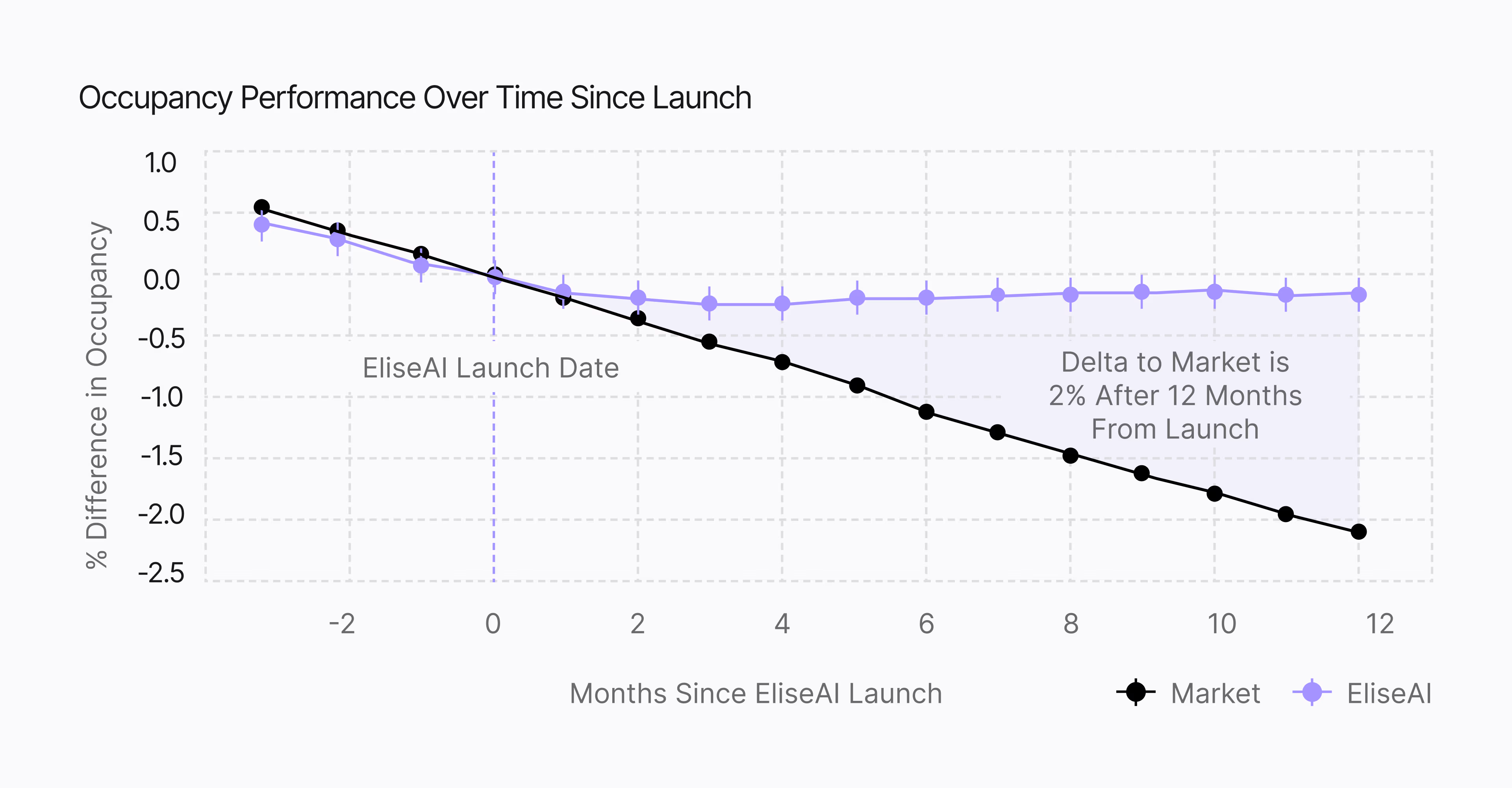
We set out to measure the true impact of AI on occupancy by analyzing data across 3,763 multifamily communities using EliseAI’s products. The results were clear: operators leveraging EliseAI see, on average, a 2% higher occupancy rate over a 12-month period after deployment compared to those who do not use AI—effectively defying the broader trend of rising vacancy rates since 2021.
This increase is driven by a combination of factors, including:
Together, these capabilities enable operators to outperform market norms and maintain stronger occupancy rates in a challenging rental environment.
EliseAI’s Research Team conducted a comprehensive analysis of occupancy trends across 3,763 multifamily communities on the EliseAI platform, using data from 2022 onward to understand the true impact of AI on property performance.The findings were definitive: AI has a statistically significant impact on occupancy, consistently driving improved performance compared to communities not using AI.
To evaluate this effect, the team modeled each community’s occupancy over a 15-month period—spanning from three months before AI rollout to twelve months after. This analysis leveraged data from phone surveys that power the ALN Database, allowing the team to compare the performance of AI-enabled communities not just to their past selves, but to market-level trends. The result: a clear, data-backed case for the role of AI in boosting occupancy and strengthening multifamily operations.

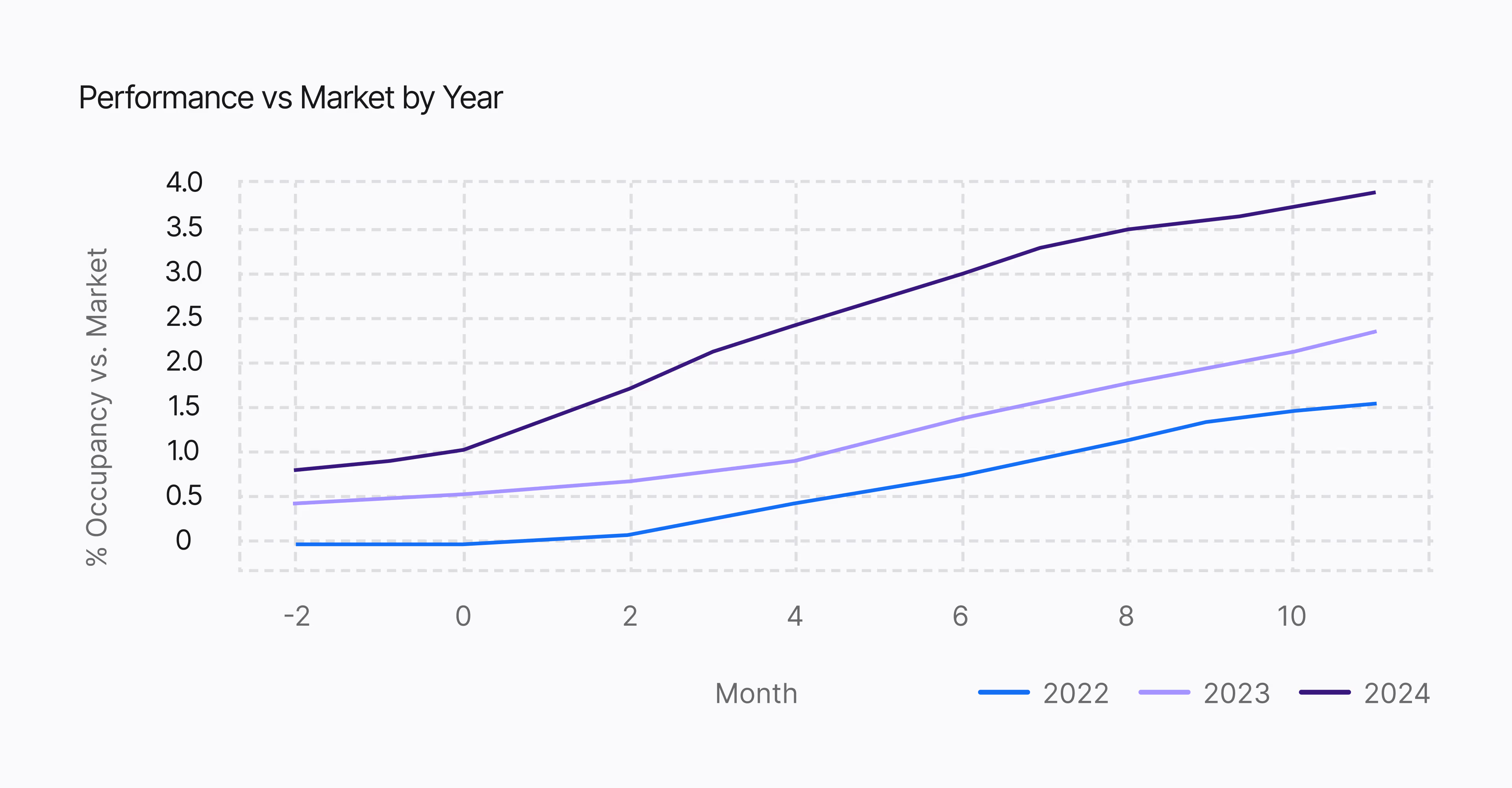
This study also revealed a compelling trend: as the EliseAI platform and its full suite of conversational AI tools have evolved, asset performance has continued to improve—especially for more recent product launches. Data from 2024 rollouts showed a higher average occupancy uplift than those from 2022 and 2023. This indicates that EliseAI’s platform is not only effective, but continually getting better. These improvements are driven by the platform’s ability to learn from and scale across 400+ operators managing millions of rental housing units, feeding product development with deep, real-world insights.
Importantly, even earlier versions of the EliseAI platform outperformed market benchmarks. And with every new release—such as AI-Guided Tours and Lease Audits—the performance delta continues to grow. As a result, we expect the gap in performance between operators who adopt AI and those who don’t to widen significantly, further reinforcing the strategic advantage of empowering onsite teams with intelligent automation.
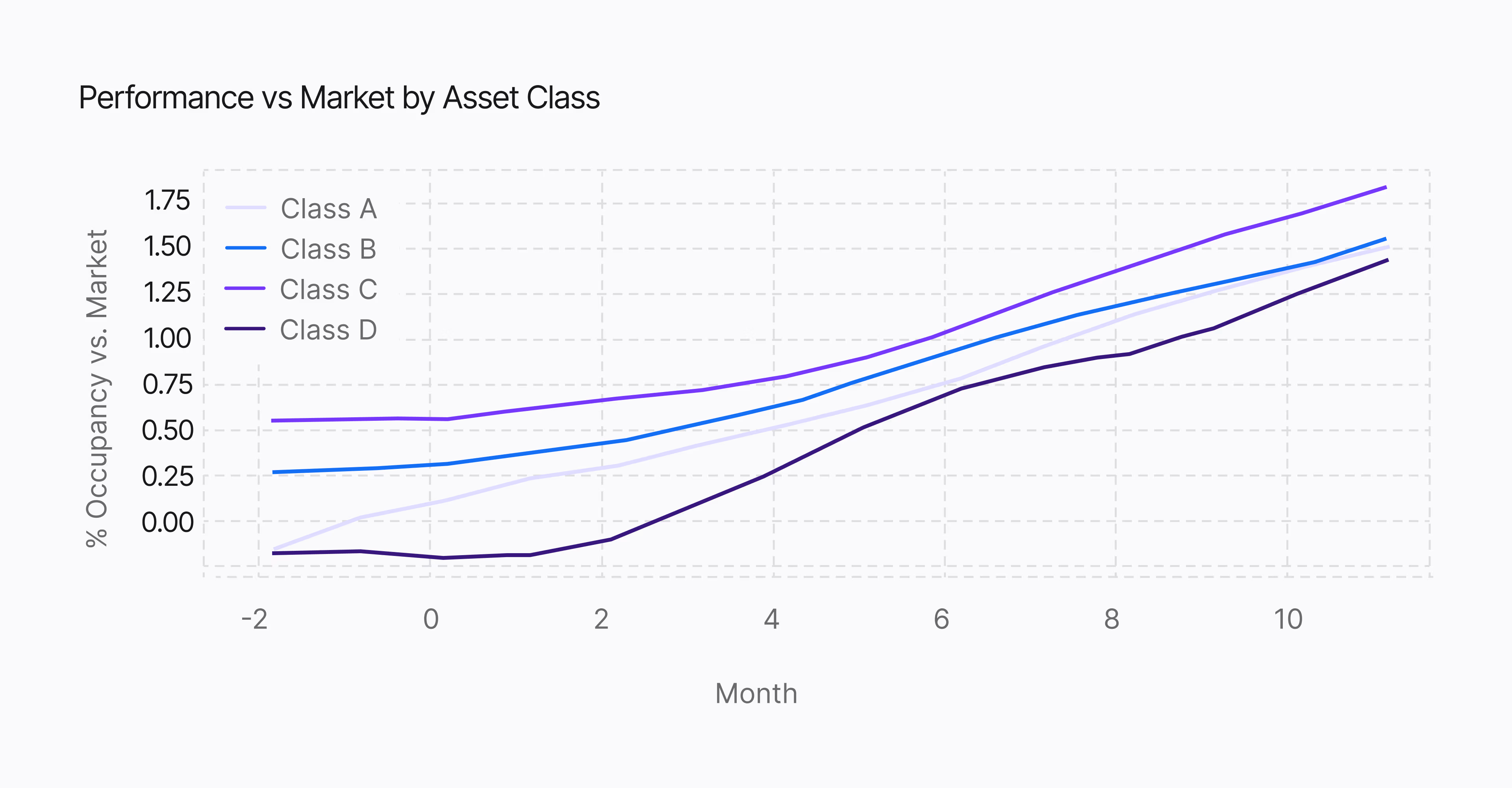
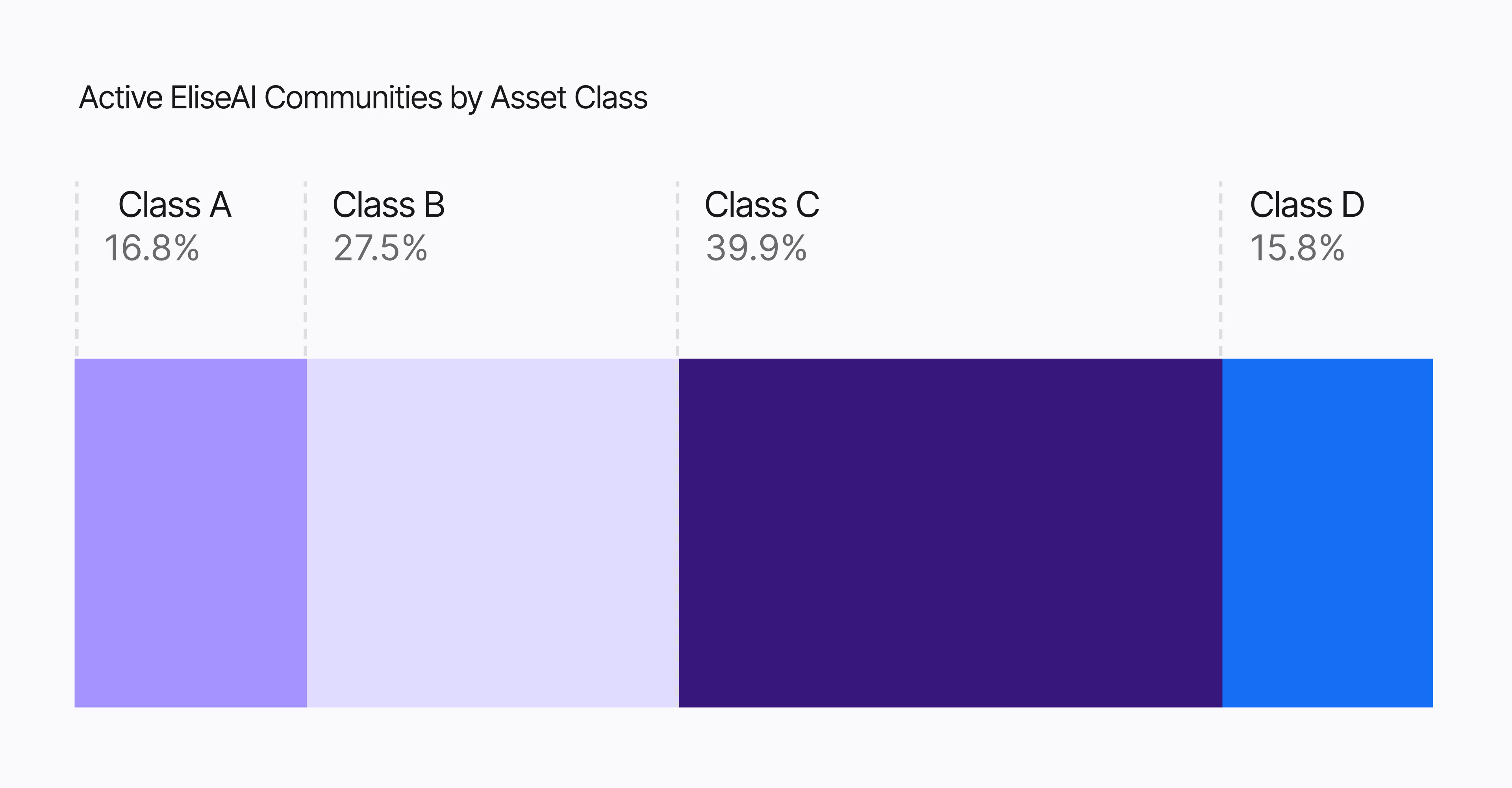
When occupancy rates for AI-powered communities are analyzed by asset class, EliseAI delivered meaningful gains across the board. Properties in every tier consistently outperformed their respective market benchmarks. Class D assets, in particular, saw the largest average uplift—highlighting a strong use case for deploying AI in naturally occurring affordable housing communities. These results emphasize the value of automation in environments where onsite resources may be limited.
At the same time, Class A, B, and C properties also experienced steady, sustained improvements in occupancy over time. This broad-based performance shows that AI isn’t just effective in select segments—it drives impact across the full multifamily housing spectrum.
ALN data reveals that communities in certain regional markets have experienced the impact of AI on occupancy rates more acutely than others. For management companies operating in smaller markets—such as Boise-based TableRock Residential—being early adopters of AI can translate into even greater occupancy gains compared to local market averages.
Rolling out AI ahead of competitors allows operators in these areas to establish a clear advantage.
As AI adoption continues to expand into more downmarket communities, that edge may begin to narrow. However, those who move early not only benefit from improved occupancy now, but also gain valuable operational insights they can use to optimize leasing conversion rates over time.

View our interactive map of regional occupancy trends here.

Given today’s unstable macroeconomic conditions and declining occupancy trends, operators are under more pressure than ever to find innovative ways to do more with less. AI has emerged as a key unlock for forward-thinking management companies, enabling them to centralize operations, automate repetitive transactional communications, ease the burden on overextended onsite teams, and deliver stronger resident experiences than what was previously possible with human teams alone.
While major operators like Equity Residential have already reported significant cost savings from AI adoption, the fact that EliseAI’s products have also driven a measurable increase in occupancy rates—across a statistically significant sample of communities—marks a true inflection point for the property management industry.
The numbers speak for themselves: AI is ushering in a new era of multifamily operations—one where residents, prospects, operators, and owners all benefit from the fast, helpful, and always-on support that only artificial intelligence can provide.
All data used in this study was provided courtesy of ALN Apartment Data. ALN’s dataset is compiled by teams of trained researchers who collect information from publicly available sources and conduct primary research through phone-verified surveys across thousands of multifamily properties.
To ensure accuracy and reliability, the EliseAI Research Team applied several filters to the raw dataset:
Each community was evaluated by comparing its occupancy trend from three months before AI deployment (T–3) to twelve months after (T+12), benchmarking against its respective market’s performance.
To isolate the effect of AI, the team normalized occupancy deltas to zero at T–0 (the month of AI launch). They then matched each property to its corresponding market trend using ALN’s market-level data, enabling an apples-to-apples comparison of AI-powered properties versus the broader market.
The findings—an average 2% uplift in occupancy—were found to be statistically significant, with a t-statistic of 16.82 and a standard error of the mean at 0.18%.
Since the COVID-19 pandemic began in early 2020, the multifamily industry has lived several lives in a short period of time. First, the industry persevered through an initial chill in rental transactions due to government-enforced lockdowns. This stretch gave way to a period of all-time high occupancy rates—cresting at 98% nationwide in the second half of 2021—as new starts and deliveries dropped to historic lows due to those same lockdowns.
Renters, empowered to work remotely, stretched their legs to growing markets like Austin, Denver, and Phoenix. As a result of high demand and low supply during peak pandemic times, nationwide rental prices hit an all-time high.
Since that apex in late 2021, occupancy rates have consistently started to decrease alongside rents, as multifamily developers have worked to combat unit shortages in certain markets through increased starts and high delivery numbers. Today, nationwide occupancy rates are below where they were when the pandemic began, as slow unit absorption relative to delivery has resulted in more and more vacancies in markets across the country.
When we step back and look at nationwide occupancy data from the past five years, some trends jump off the page. For one, it’s clear that the pendulum has quickly swung from supply shortages to a glut of supply—particularly in the Sunbelt. While certain Northeastern metropolitan areas have driven high year-over-year rent growth, recent data indicates that the supply-demand imbalance is driving rents down across much of the country, outside of markets like New York and Boston that are pulling average rents up.
The largest—and most alarming—trend for multifamily operators is the sustained decrease in year-over-year occupancy rates since their peak in late 2021. With net absorption rates continuing to substantively lag behind deliveries, occupancy rates are continuing to trend downward across the country.
The pressure from decreased occupancy could have significant negative effects for operators. Prohibitively high interest rates make refinancing expiring loans a costly proposition, contributing to 2024’s year-over-year increase in multifamily mortgage delinquency rates, alongside rising expenses and flat revenues. Should dealmaking activity pick up in the second half of 2025, low occupancy rates will also factor into negotiations and may impact market pricing. Meanwhile, as consolidation continues—with larger operators acquiring more and more assets—smaller operators will feel growing pressure to compete in a tightening economic climate.
There is, however, a certain type of operator that has consistently outperformed the industry average occupancy rates since 2021. What distinguishes them from their peers? A strong focus on innovation—and in particular, a commitment to leveraging AI.
The property management industry has undergone a rapid transformation over the past few years, driven by an influx of new technologies and the rise of centralized operating models. This evolution is a direct response to heightened consumer expectations and increasing financial pressures. Today’s renters—conditioned by companies like Netflix, Amazon, and Grubhub—expect round-the-clock, personalized service. As a result, owners, owner/operators, and fee managers have had to quickly adapt to meet the demands of the modern renter.
To keep pace, many innovative operators have turned to multifamily AI providers like EliseAI, leveraging the power of conversational AI to deliver instant, around-the-clock responses to both resident and prospect inquiries.
Operators using EliseAI’s suite of conversational tools to automate the full prospect-to-resident lifecycle have reported significant results: improved leasing conversion rates, decreased delinquent payments, and more efficient staffing ratios made possible through automation. These operator-level improvements point to AI’s transformative impact on operational efficiency and net operating income (NOI).
However, while the operational benefits of AI have been clear, the industry has—until now—stopped short of measuring its direct impact on occupancy.
We set out to measure the true impact of AI on occupancy by analyzing data across 3,763 multifamily communities using EliseAI’s products. The results were clear: operators leveraging EliseAI see, on average, a 2% higher occupancy rate over a 12-month period after deployment compared to those who do not use AI—effectively defying the broader trend of rising vacancy rates since 2021.
This increase is driven by a combination of factors, including:
Together, these capabilities enable operators to outperform market norms and maintain stronger occupancy rates in a challenging rental environment.
EliseAI’s Research Team conducted a comprehensive analysis of occupancy trends across 3,763 multifamily communities on the EliseAI platform, using data from 2022 onward to understand the true impact of AI on property performance.The findings were definitive: AI has a statistically significant impact on occupancy, consistently driving improved performance compared to communities not using AI.
To evaluate this effect, the team modeled each community’s occupancy over a 15-month period—spanning from three months before AI rollout to twelve months after. This analysis leveraged data from phone surveys that power the ALN Database, allowing the team to compare the performance of AI-enabled communities not just to their past selves, but to market-level trends. The result: a clear, data-backed case for the role of AI in boosting occupancy and strengthening multifamily operations.
This study also revealed a compelling trend: as the EliseAI platform and its full suite of conversational AI tools have evolved, asset performance has continued to improve—especially for more recent product launches. Data from 2024 rollouts showed a higher average occupancy uplift than those from 2022 and 2023. This indicates that EliseAI’s platform is not only effective, but continually getting better. These improvements are driven by the platform’s ability to learn from and scale across 400+ operators managing millions of rental housing units, feeding product development with deep, real-world insights.
Importantly, even earlier versions of the EliseAI platform outperformed market benchmarks. And with every new release—such as AI-Guided Tours and Lease Audits—the performance delta continues to grow. As a result, we expect the gap in performance between operators who adopt AI and those who don’t to widen significantly, further reinforcing the strategic advantage of empowering onsite teams with intelligent automation.
When occupancy rates for AI-powered communities are analyzed by asset class, EliseAI delivered meaningful gains across the board. Properties in every tier consistently outperformed their respective market benchmarks. Class D assets, in particular, saw the largest average uplift—highlighting a strong use case for deploying AI in naturally occurring affordable housing communities. These results emphasize the value of automation in environments where onsite resources may be limited.
At the same time, Class A, B, and C properties also experienced steady, sustained improvements in occupancy over time. This broad-based performance shows that AI isn’t just effective in select segments—it drives impact across the full multifamily housing spectrum.
ALN data reveals that communities in certain regional markets have experienced the impact of AI on occupancy rates more acutely than others. For management companies operating in smaller markets—such as Boise-based TableRock Residential—being early adopters of AI can translate into even greater occupancy gains compared to local market averages.
Rolling out AI ahead of competitors allows operators in these areas to establish a clear advantage.
As AI adoption continues to expand into more downmarket communities, that edge may begin to narrow. However, those who move early not only benefit from improved occupancy now, but also gain valuable operational insights they can use to optimize leasing conversion rates over time.
View our interactive map of regional occupancy trends here.
Given today’s unstable macroeconomic conditions and declining occupancy trends, operators are under more pressure than ever to find innovative ways to do more with less. AI has emerged as a key unlock for forward-thinking management companies, enabling them to centralize operations, automate repetitive transactional communications, ease the burden on overextended onsite teams, and deliver stronger resident experiences than what was previously possible with human teams alone.
While major operators like Equity Residential have already reported significant cost savings from AI adoption, the fact that EliseAI’s products have also driven a measurable increase in occupancy rates—across a statistically significant sample of communities—marks a true inflection point for the property management industry.
The numbers speak for themselves: AI is ushering in a new era of multifamily operations—one where residents, prospects, operators, and owners all benefit from the fast, helpful, and always-on support that only artificial intelligence can provide.
All data used in this study was provided courtesy of ALN Apartment Data. ALN’s dataset is compiled by teams of trained researchers who collect information from publicly available sources and conduct primary research through phone-verified surveys across thousands of multifamily properties.
To ensure accuracy and reliability, the EliseAI Research Team applied several filters to the raw dataset:
Each community was evaluated by comparing its occupancy trend from three months before AI deployment (T–3) to twelve months after (T+12), benchmarking against its respective market’s performance.
To isolate the effect of AI, the team normalized occupancy deltas to zero at T–0 (the month of AI launch). They then matched each property to its corresponding market trend using ALN’s market-level data, enabling an apples-to-apples comparison of AI-powered properties versus the broader market.
The findings—an average 2% uplift in occupancy—were found to be statistically significant, with a t-statistic of 16.82 and a standard error of the mean at 0.18%.


