
Built to Automate & Scale Your Operations
Answer a couple of questions and we'll connect you with the right team member.
Answer a couple of questions and we'll connect you with the right team member.


Of Operators Report Lead-to-Lease Increases w/AI
Of Operators Have Implemented AI Solutions
Of Operators Have Cut Expenses with AI
EliseAI’s survey of 280 multifamily executives makes one thing clear: AI is not the future of property management. It’s the present. AI has already arrived and is driving measurable outcomes for operators big and small across the country.
With 68% percent of respondents already incorporating AI into their key business systems, 60% using AI to automate resident conversations, and 77% replying that AI is already driving a moderate to significant reduction in operating expenses, the bottom line becomes undeniable—those who do not use AI are leaving money on the table and handing their AI-enabled peers a substantial competitive advantage.

As 2025 comes to a close, the multifamily industry finds itself at a crossroads. Since the advent of ChatGPT in late 2022, we’ve faced years of conference panels, industry podcasts, and thought pieces about the expected impact of artificial intelligence solutions on a people-driven industry. 2025, however, felt different. This year felt like the year that operators finally began to fully embrace AI. And even though a recent MIT report stated 95% of generative AI pilots across large enterprises run the risk of failing, anyone who has tried to lease an apartment in the last 12 months knows that AI has already become an inevitable part of the apartment hunting journey… but what does the data show about the actual impact it’s having?
EliseAI recently conducted a survey of 280 multifamily executives at operators with more than 200 employees about their companies’ approaches to AI, as well as their personal insights into AI usage in property management. This first-of-its-kind statistical deep dive into the proliferation of AI in the multifamily industry revealed interesting insights and unexpected patterns around the usage of AI—let’s start with some benchmarking data.
.avif)
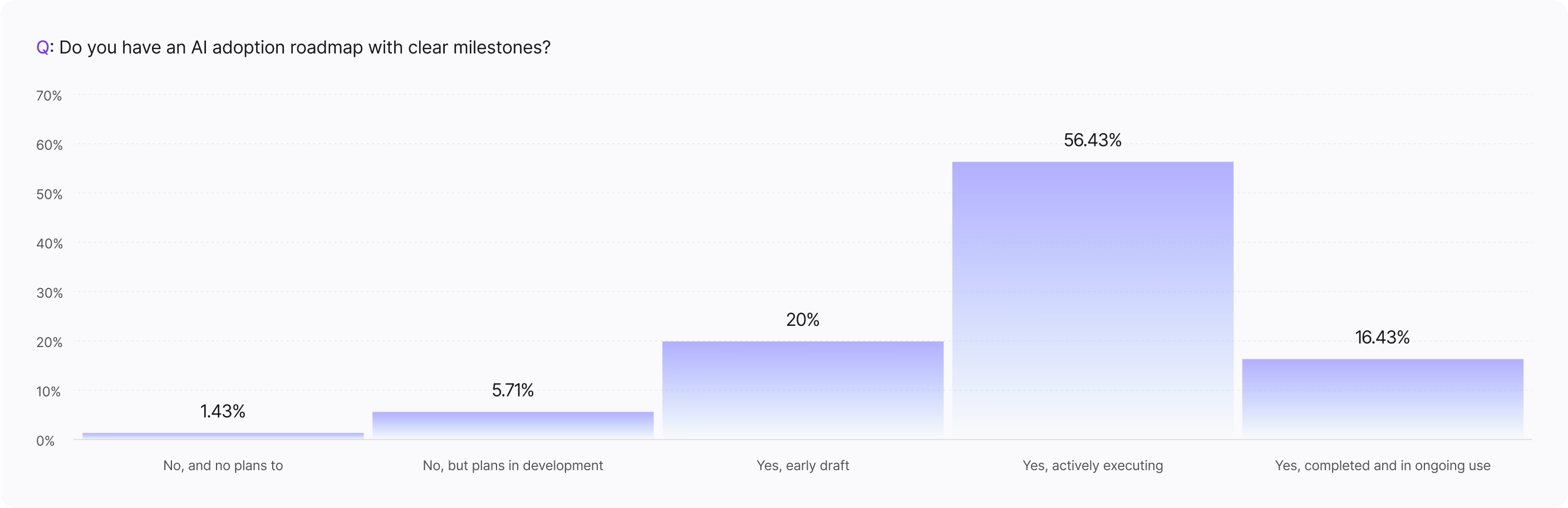
If there’s one headline conclusion from our survey it’s this: responses show that AI has already become an integral part of multifamily operations for a large proportion of our survey respondents. Over 99% of respondents indicated that they are either planning on implementing AI or already have, meaning AI is well on its path to becoming foundational infrastructure for the industry. There’s no longer a question of “will AI reinvent multifamily,” the question has now become of “how will multifamily adapt to fit the strengths of AI?” Operators are beginning to think in that direction as well, as our research indicated that 89% of companies surveyed plan to include AI as key components of their strategic plans moving forward.
.avif)
.avif)
The impact of AI can be felt across the multifamily operating model today. Our respondents made it clear that AI isn’t just a leasing solution that lives with marketing. Today, AI touches every aspect of the prospect-through-resident lifecycle: leasing, resident services, maintenance, rent collection, and more.
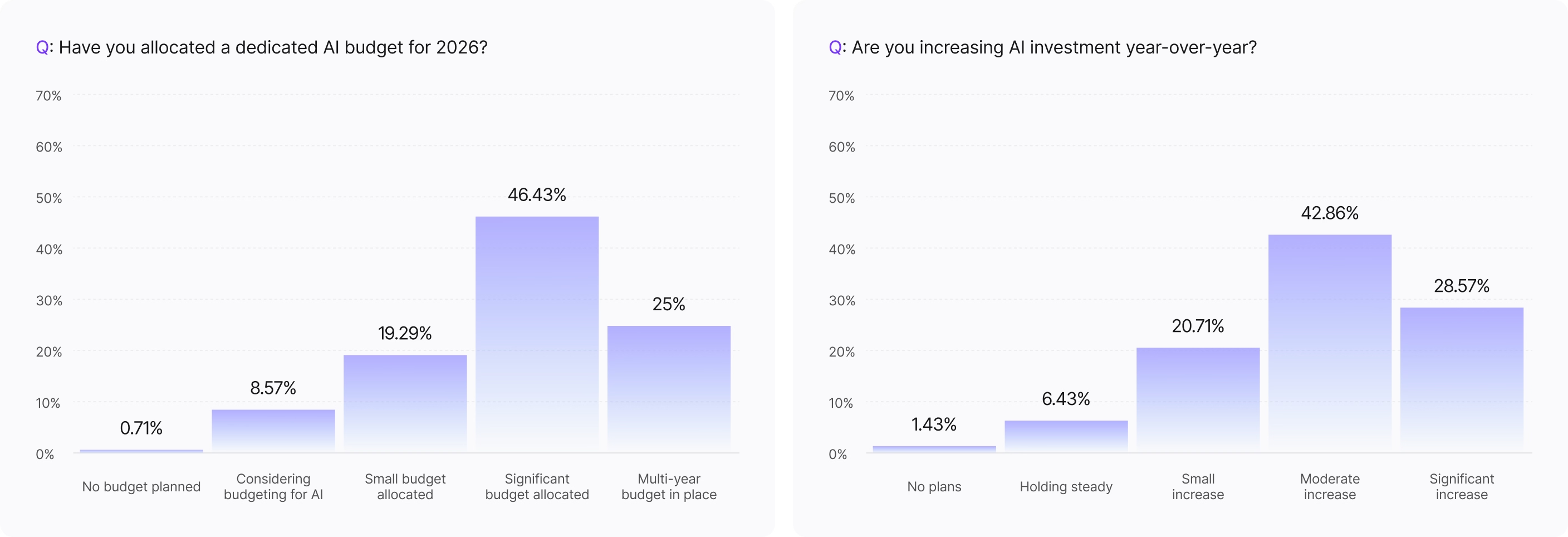
The budget for these AI tools continues to expand as well as they move from being seen as point solutions to fundamental architecture for multifamily operations. Over 70% of the operators we surveyed are already allocating significant budgets for AI as they switch their focus from basic leasing automation to full scale, agentic AI powered automation of routine work across the entire prospect-through-resident lifecycle. 71% are implementing either moderate or significant increases to their AI budget year-over-year as well.
Operators who see where the industry is heading are getting ahead by putting multiyear budgets in place, recognizing the significant year-over-year performance improvement of AI technology and getting ahead of the curve by budgeting for expansion now.
.avif)
The extensive capabilities of AI are only beginning to be realized for multifamily. Our survey results showed that most operators are so all-in on AI that they’re applying them to multiple areas of their operations. In fact, 86% of respondents are already running multiple AI pilots at once! AI is no longer just a little widget that sits at the bottom right of your website and answers questions from prospects—it’s an integral part of the multifamily tech stack.
.avif)
Need further evidence that AI is becoming foundational rather than additional? 97% of respondents are either actively incorporating or piloting AI incorporation into their existing business systems, realizing that it can drive efficiency gains across all aspects of the business—not just in silos. And the best operators are planning for those gains with their teams: many are either bringing on AI-focused team members, upleveling their existing staff, or doing both.
.avif)
Smart operators are looking to maximize their teams’ output levels by training them on AI usage, as well as reshaping onsite roles and responsibilities to better compliment the efficiency gains achieved with AI. Over 99% of operators surveyed told us that they were planning on training their onsite staff on AI tools, making it crystal clear that the future of the onsite experience will be deeply integrated with AI. Whether it’s basic usage of tools like ChatGPT to help onsite team members write emails faster, or extensive use of purpose-built agentic AI solutions like EliseAI to automate the creation of work orders, tour scheduling and agent assignment, and rent collection, the efficiency gains delivered by these new solutions makes training your staff on them a no brainer.
Some operators are moving beyond just upleveling their staff by bringing in dedicated AI leads. There’s pros and cons to this approach, as it does run the risk of siloing AI in its own category rather than integrating it throughout the multifamily operating model, but the point holds—smart operators are ensuring they get as much juice out of AI as possible. 35% of respondents have already assigned a dedicated AI-lead to manage rollouts and pilots, and another 26% have gone one step further and built out AI teams.
These data points make it clear that AI already has a seat at the table of multifamily operations. But that means nothing if AI isn’t driving real results. What did our respondents have to say about the impact of AI on the bottom line?
Part of the apprehension many operators had in the early days of AI for multifamily was generating return on investment for the cost of the tools. EliseAI-powered operators have had no issue doing so, but there was still general apprehension about showing ROI for tech spend. Fortunately, our survey showed that many of these concerns have faded as AI technology has continued to improve over time.
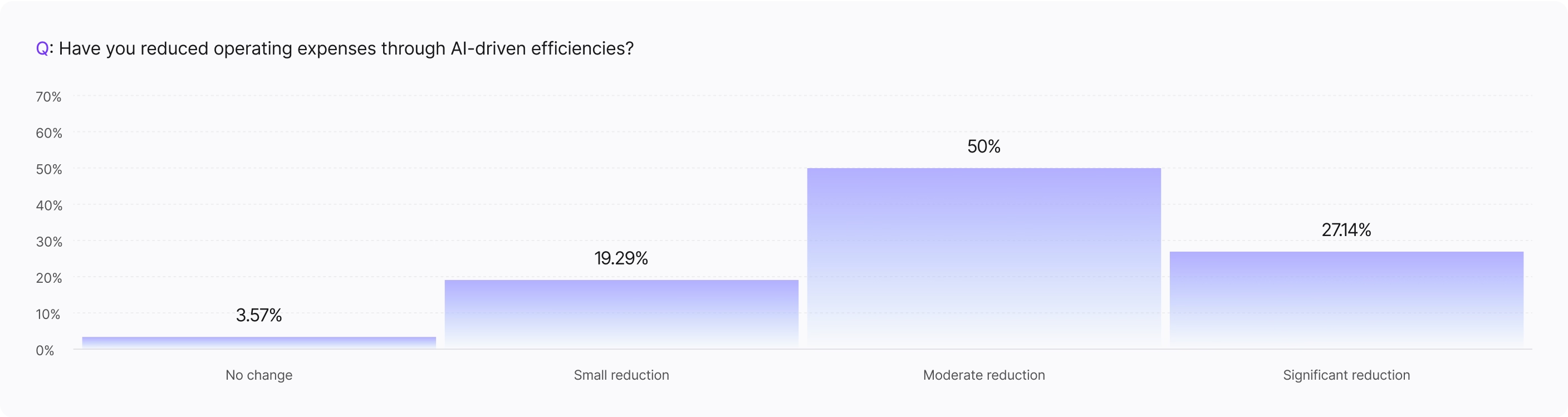
Over 77% of operators we surveyed reported either a moderate or significant reduction in operating expenses from the usage of AI, directly tying cost savings to the efficiencies created by agentic AI and automation. Whether through role consolidation, reduced staffing hours, or improved decision making based on data gathered by AI, it’s clear that operators are already seeing concrete cost reductions with AI.
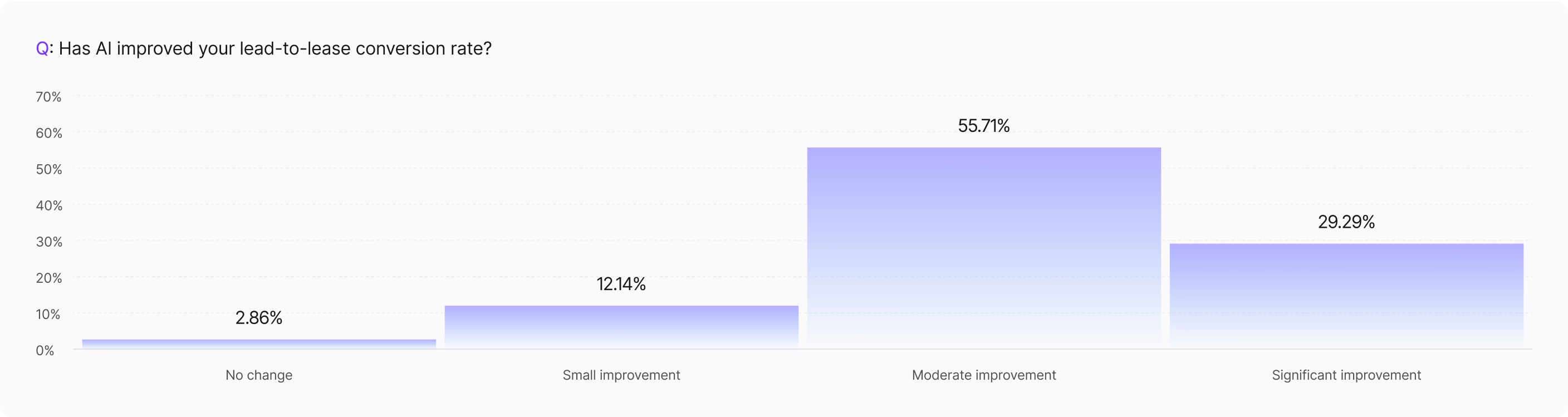
Operators leveraging AI also reported significant lead-to-lease conversion rate increases. 56% of those we surveyed saw a moderate uplift in lead-to-lease with AI, and almost 30% reported a significant increase. When it comes to filling units faster, our respondents make it clear that AI is the path forward.
But the impact of AI in multifamily goes beyond reducing costs and improving conversion rates—it’s also about making a measurable difference on the resident experience.

AI is already making a substantial impact on the way residents interact with the communities they live in—and our survey makes the impact clear. 85% of respondents noted that AI has driven either a moderate or significant improvement to resident satisfaction scores. This makes perfect sense when put against the background of the on-demand economy we live in.
People bring their expectations for seamless, friction-free digital experiences to the communities that they live in, and AI helps make sure those expectations are met. Instead of forcing your residents to interact with a clunky resident app, having an AI open a work order via text message can ensure your residents feel heard and supported while eliminating friction.

Happier residents, in theory, translate to improved renewal rates—an outcome that over 65% of operators surveyed are seeing after deploying AI in their communities. Almost 28% of our respondents reported that AI has driven a significant improvement in renewal rates, which, when coupled with the resident sentiment scores, make it clear that the responsive nature of AI is well suited to the modern renter experience.
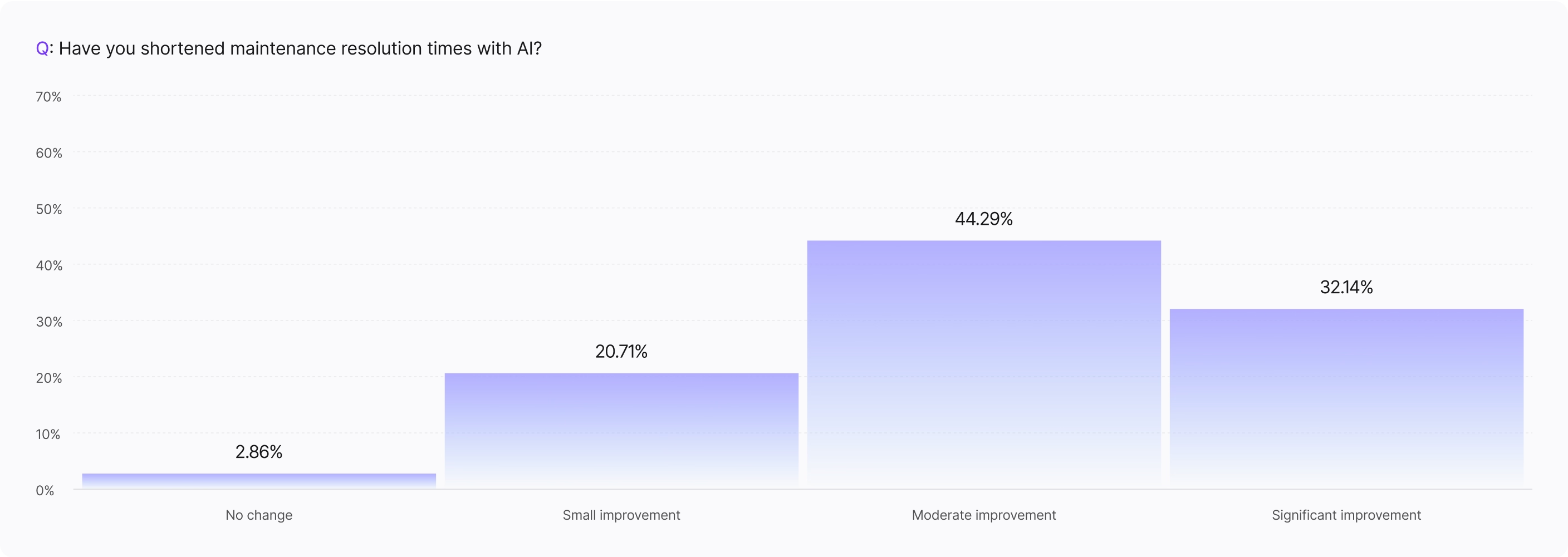
Maintenance operations have seen a similar uplift from AI. Over 75% of respondents noted that AI has either driven a moderate or significant improvement in reducing maintenance resolution times. When combined with the above question about the impact of AI on resident sentiment, it becomes clear that AI is creating a positive and measurable impact on the resident experience.
However, our survey showed certain operators still find themselves apprehensive about AI—let's double click into their apprehension to understand it a bit better.

Any new technology brings the perception of risk, but innovation requires taking chances. Most of the pitfalls and risks mentioned by our respondents, importantly, are not specific to AI. Cybersecurity vulnerabilities, staff resistance, vendor lock-in, and resident data privacy concerns could be seen as concerns for any piece of new tech you deploy, whether it’s something as impactful as AI or a point solution like a simple mass messaging tool. Still, even knowing that these fears aren’t unique to AI, they can still be amplified by the transformative nature of the technology. That’s why EliseAI has a robust Trust Center where we demonstrate our commitment to compliance and security, aggregate relevant documentation, and provide insight into the controls we have in place.
One other key takeaway from this group of multifamily leaders is that there’s little agreement on how exactly executives and leadership feel about their own approach to AI. These next two charts tell an interesting, and in some ways, paradoxical story.
.avif)
Over 50% of respondents either agree or strongly agree that most multifamily executives are underestimating the impact of AI. At the same time, nearly 70% of them have said that their leadership team is fully committed to AI adoption. How do we reconcile these two viewpoints? One potential explanation is that the leadership teams at our respondents’ organizations have done an excellent job of convincing their teams to buy in, leading them to be slightly biased about other organizations’ comparative commitment to AI. If these early adopting leaders are incorporating a pro-AI approach to their messaging that resonates with their teams, they could also consistently emphasize the competitive advantages of deploying AI to create a “winning” mentality that the team carries with them when evaluating competitors.
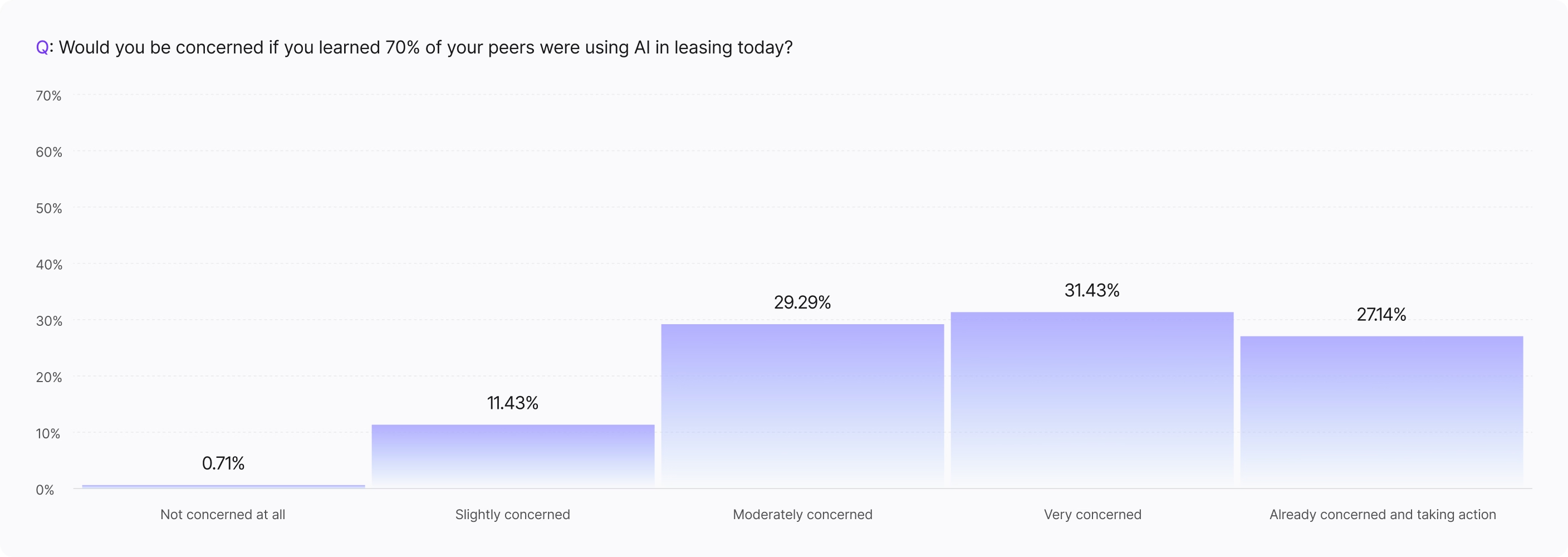
This competitive mindset permeated our survey, with operators reacting strongly to the suggestion that their peers are outpacing them in deploying AI for leasing. In the on-demand economy, the prospect wins more often than not, making it crucial to keep pace with technology. Nearly 60% of respondents are very concerned or concerned and taking action about the comparative pace they see their peers deploying AI at… and with good reason.
.avif)
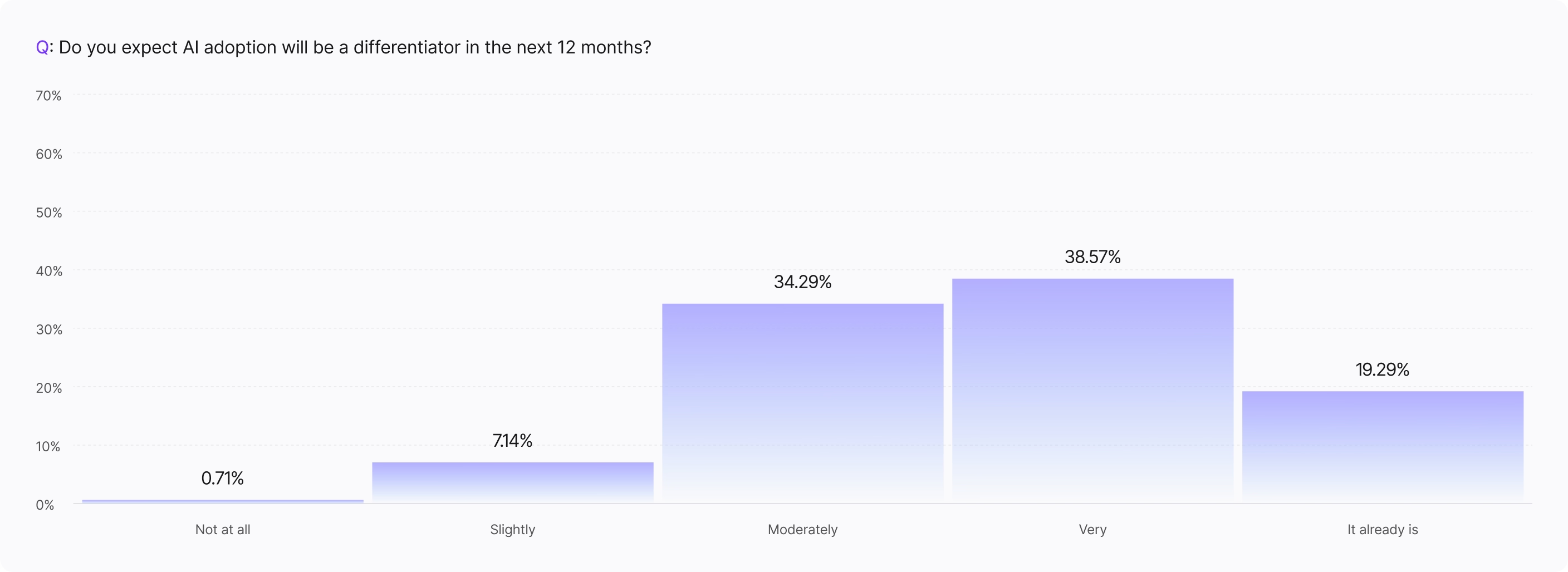
Our data shows that AI is no longer an afterthought for rental housing operators—it is a strategic growth lever that fast-moving management companies are leaning on to acquire new business. Over 75% of respondents reported that they see widespread application of AI in new business pitches, with 10% of our respondents stating that nearly all operators are incorporating this positioning into their new business acquisition strategies.
This represents a watershed moment for the industry as more and more operators recognize that AI grants them a competitive advantage. Whether that competitive advantage comes in the form of the increased speed with which they reach prospects, the increased responsiveness to residents requests that positively impact sentiment, or the data-driven impact on retention rates, forward-looking operators have come to the realization that they can build trust and credibility with ownership groups by incorporating AI into their pitches.
But the impact of AI on the acquisition of new business doesn’t only resonate today—it’s about the future competitive moat that these tech-enabled operators are digging for themselves.

.avif)
Almost 40% of operators surveyed strongly agreed that early AI adopters will reap a permanent competitive advantage, and 30% stated they’re already seeing it happen. Survey data doesn’t lie: it’s clear that the moat between the best operators and the rest of the field is already beginning to expand. Look no further than the rapid growth of operators like Asset Living. Their meteoric rise up the NMHC Top 50 reflects a strong commitment to using best in class technology (like EliseAI) to deliver incredible resident experiences at scale.
When we reflect operators’ concerns about the fact that early adopters are building a moat against the fact that 32% of surveyed operators stated they believe their competitors are adopting AI slightly faster than they are, we can already feel collective anxiety start to build. Many of our respondents feel like they’re either moving as fast as their peers (28%) or are in fact moving faster (27%), but the portion that feels they’re getting left behind represents the largest chunk. There is a potential light at the end of the tunnel here—impostor syndrome is real, and the pressure to “keep up with the Joneses” might be motivating some of this comparative hand-wringing—but still, we cannot overestimate the conviction operators feel that AI is creating a permanent competitive advantage.
.avif)
This theme is also reflected in the inverse when we asked operators about the impact of slow AI adoption on NOI. 72% of operators we surveyed are moderately or very concerned that slow AI adoption could have a negative impact on NOI, and 16% went one step further and stated they’re already seeing it happen. In a tight macroeconomic climate where every lost lease or wasted marketing dollar hurts more, operators are already starting to feel the pinch from falling behind on AI. Now more than ever is a time to take action and get ahead of the curve, instead of standing on the far side of the chasm watching as the gap between you and your competitors continues to grow.
Now that we can state with conviction that AI is widening the gap between the best and the rest, what do we expect or anticipate for the future of AI in multifamily in 2026 and beyond?
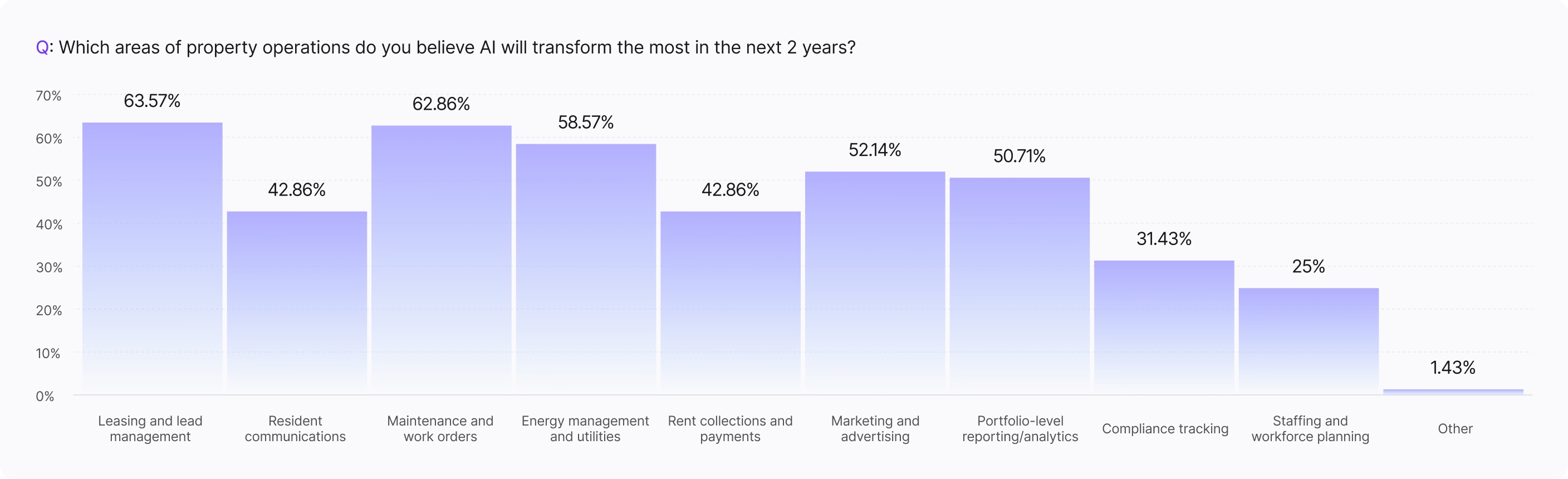
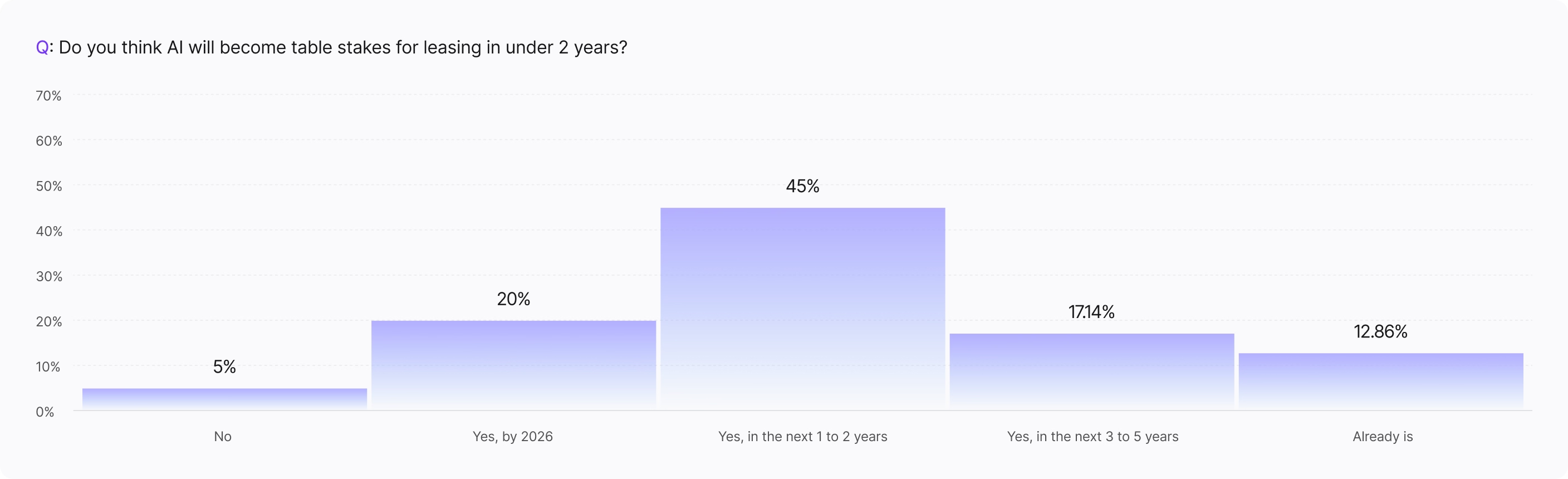
The executives we polled had varied opinions on which aspects of multifamily operations will be most impacted by AI in the next few years, but a few stood out in particular. Perhaps the most apparent area (and arguably the area AI has impacted most already) is leasing. Only 5% of the operators we surveyed think that AI won’t become table stakes for leasing over the next few years—a sentiment that might come back to bite them as they lose out on the nearly 50% of prospects who submit inquiries after-hours to AI-enabled operators. The fact that AI will reinvent leasing operations makes perfect sense in light of changing consumer behavioral patterns, as conditioned by the on-demand economy—but what other areas do operators expect to see the largest impact in?
Maintenance and work orders are another area our respondents expected to see further AI-powered innovation occur in, and with good reason. Agentic AI is a perfect complement for the tactile skillsets of maintenance professionals, automating documentation and technician coordination to turn disorganized teams into well oiled machines. AI allows skilled maintenance workers to focus on what they do best—solving problems for your residents—and eliminates the part of the job many of them struggle with, documentation, organization, and communication. AI for maintenance also takes resident variability out of the equation, ensuring that work orders are created in a uniform and consistent manner that makes capacity planning far easier.
One area many operators seem to be overlooking the impact of AI on? Staffing and workforce planning. This answer, however, doesn’t align well with another question we asked our respondents: whether or not they expect AI to replace at least one traditional role in the organization by 2026.
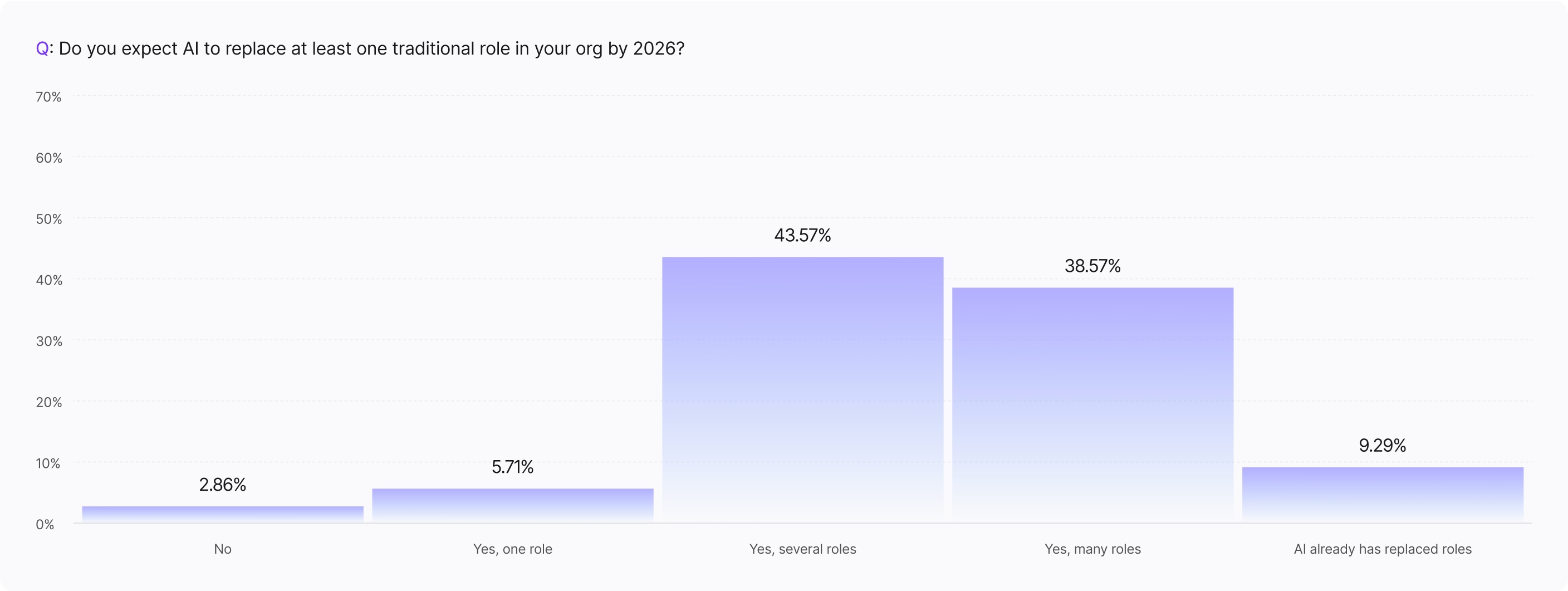
AI is already allowing leading operators like MG Properties to adjust their staffing models to better meet the needs of their residents while staying cost-efficient. Our respondents’ sentiment reflected that: 82% see AI replacing several or many roles, while 10% have already been able to make headcount adjustments based on AI deployment. This initiative isn’t solely about reducing costs through headcount reduction, but rather more effectively serving modern renters while also providing new, centralized career paths for property management professionals. The combination of AI to automate the mundane and people to perform high-value, in-person tasks like resident programming represents the path forward for the multifamily industry.
When taken in summary, this one-of-a-kind study of AI proliferation in multifamily helps us draw a clear picture of the now and future of the industry we know well. AI is no longer a shiny new toy—it has established its place as a fundamental part of property management operations. The gap between AI-enabled, visionary operators and those who cling onto the ways of the past will only continue to expand as the technology accelerates.
For those operators ready to embrace AI as foundational property management architecture, there’s EliseAI. EliseAI has, and always will be, an AI-first organization—not AI as an afterthought or AI as an add-on. Over 600 operators around the country, including 38 of the NMHC Top 50 operators, currently use EliseAI products to create new efficiencies and improve conversion rates throughout the entire prospect-through-resident lifecycle. In doing so, they’re serving their customers better, delivering better returns for owners, and creating cost savings that can materially impact the cost of living. That’s the promise of EliseAI: a more efficient way of working that better suits the needs of the modern renter, all with AI at the heart of property management operations.
EliseAI surveyed 280 multifamily executives holding director level titles or above at operators with 200 or more employees. Of the respondents, 138 listed their job function as “Property Management,” 68 listed their job function as “Operations,” and the remaining 74 responded “Marketing.”
As 2025 comes to a close, the multifamily industry finds itself at a crossroads. Since the advent of ChatGPT in late 2022, we’ve faced years of conference panels, industry podcasts, and thought pieces about the expected impact of artificial intelligence solutions on a people-driven industry. 2025, however, felt different. This year felt like the year that operators finally began to fully embrace AI. And even though a recent MIT report stated 95% of generative AI pilots across large enterprises run the risk of failing, anyone who has tried to lease an apartment in the last 12 months knows that AI has already become an inevitable part of the apartment hunting journey… but what does the data show about the actual impact it’s having?
EliseAI recently conducted a survey of 280 multifamily executives at operators with more than 200 employees about their companies’ approaches to AI, as well as their personal insights into AI usage in property management. This first-of-its-kind statistical deep dive into the proliferation of AI in the multifamily industry revealed interesting insights and unexpected patterns around the usage of AI—let’s start with some benchmarking data.
If there’s one headline conclusion from our survey it’s this: responses show that AI has already become an integral part of multifamily operations for a large proportion of our survey respondents. Over 99% of respondents indicated that they are either planning on implementing AI or already have, meaning AI is well on its path to becoming foundational infrastructure for the industry. There’s no longer a question of “will AI reinvent multifamily,” the question has now become of “how will multifamily adapt to fit the strengths of AI?” Operators are beginning to think in that direction as well, as our research indicated that 89% of companies surveyed plan to include AI as key components of their strategic plans moving forward.
The impact of AI can be felt across the multifamily operating model today. Our respondents made it clear that AI isn’t just a leasing solution that lives with marketing. Today, AI touches every aspect of the prospect-through-resident lifecycle: leasing, resident services, maintenance, rent collection, and more.
The budget for these AI tools continues to expand as well as they move from being seen as point solutions to fundamental architecture for multifamily operations. Over 70% of the operators we surveyed are already allocating significant budgets for AI as they switch their focus from basic leasing automation to full scale, agentic AI powered automation of routine work across the entire prospect-through-resident lifecycle. 71% are implementing either moderate or significant increases to their AI budget year-over-year as well.
Operators who see where the industry is heading are getting ahead by putting multiyear budgets in place, recognizing the significant year-over-year performance improvement of AI technology and getting ahead of the curve by budgeting for expansion now.
The extensive capabilities of AI are only beginning to be realized for multifamily. Our survey results showed that most operators are so all-in on AI that they’re applying them to multiple areas of their operations. In fact, 86% of respondents are already running multiple AI pilots at once! AI is no longer just a little widget that sits at the bottom right of your website and answers questions from prospects—it’s an integral part of the multifamily tech stack.
Need further evidence that AI is becoming foundational rather than additional? 97% of respondents are either actively incorporating or piloting AI incorporation into their existing business systems, realizing that it can drive efficiency gains across all aspects of the business—not just in silos. And the best operators are planning for those gains with their teams: many are either bringing on AI-focused team members, upleveling their existing staff, or doing both.
Smart operators are looking to maximize their teams’ output levels by training them on AI usage, as well as reshaping onsite roles and responsibilities to better compliment the efficiency gains achieved with AI. Over 99% of operators surveyed told us that they were planning on training their onsite staff on AI tools, making it crystal clear that the future of the onsite experience will be deeply integrated with AI. Whether it’s basic usage of tools like ChatGPT to help onsite team members write emails faster, or extensive use of purpose-built agentic AI solutions like EliseAI to automate the creation of work orders, tour scheduling and agent assignment, and rent collection, the efficiency gains delivered by these new solutions makes training your staff on them a no brainer.
Some operators are moving beyond just upleveling their staff by bringing in dedicated AI leads. There’s pros and cons to this approach, as it does run the risk of siloing AI in its own category rather than integrating it throughout the multifamily operating model, but the point holds—smart operators are ensuring they get as much juice out of AI as possible. 35% of respondents have already assigned a dedicated AI-lead to manage rollouts and pilots, and another 26% have gone one step further and built out AI teams.
These data points make it clear that AI already has a seat at the table of multifamily operations. But that means nothing if AI isn’t driving real results. What did our respondents have to say about the impact of AI on the bottom line?
Part of the apprehension many operators had in the early days of AI for multifamily was generating return on investment for the cost of the tools. EliseAI-powered operators have had no issue doing so, but there was still general apprehension about showing ROI for tech spend. Fortunately, our survey showed that many of these concerns have faded as AI technology has continued to improve over time.
Over 77% of operators we surveyed reported either a moderate or significant reduction in operating expenses from the usage of AI, directly tying cost savings to the efficiencies created by agentic AI and automation. Whether through role consolidation, reduced staffing hours, or improved decision making based on data gathered by AI, it’s clear that operators are already seeing concrete cost reductions with AI.
Operators leveraging AI also reported significant lead-to-lease conversion rate increases. 56% of those we surveyed saw a moderate uplift in lead-to-lease with AI, and almost 30% reported a significant increase. When it comes to filling units faster, our respondents make it clear that AI is the path forward.
But the impact of AI in multifamily goes beyond reducing costs and improving conversion rates—it’s also about making a measurable difference on the resident experience.
AI is already making a substantial impact on the way residents interact with the communities they live in—and our survey makes the impact clear. 85% of respondents noted that AI has driven either a moderate or significant improvement to resident satisfaction scores. This makes perfect sense when put against the background of the on-demand economy we live in.
People bring their expectations for seamless, friction-free digital experiences to the communities that they live in, and AI helps make sure those expectations are met. Instead of forcing your residents to interact with a clunky resident app, having an AI open a work order via text message can ensure your residents feel heard and supported while eliminating friction.
Happier residents, in theory, translate to improved renewal rates—an outcome that over 65% of operators surveyed are seeing after deploying AI in their communities. Almost 28% of our respondents reported that AI has driven a significant improvement in renewal rates, which, when coupled with the resident sentiment scores, make it clear that the responsive nature of AI is well suited to the modern renter experience.
Maintenance operations have seen a similar uplift from AI. Over 75% of respondents noted that AI has either driven a moderate or significant improvement in reducing maintenance resolution times. When combined with the above question about the impact of AI on resident sentiment, it becomes clear that AI is creating a positive and measurable impact on the resident experience.
However, our survey showed certain operators still find themselves apprehensive about AI—let's double click into their apprehension to understand it a bit better.
Any new technology brings the perception of risk, but innovation requires taking chances. Most of the pitfalls and risks mentioned by our respondents, importantly, are not specific to AI. Cybersecurity vulnerabilities, staff resistance, vendor lock-in, and resident data privacy concerns could be seen as concerns for any piece of new tech you deploy, whether it’s something as impactful as AI or a point solution like a simple mass messaging tool. Still, even knowing that these fears aren’t unique to AI, they can still be amplified by the transformative nature of the technology. That’s why EliseAI has a robust Trust Center where we demonstrate our commitment to compliance and security, aggregate relevant documentation, and provide insight into the controls we have in place.
One other key takeaway from this group of multifamily leaders is that there’s little agreement on how exactly executives and leadership feel about their own approach to AI. These next two charts tell an interesting, and in some ways, paradoxical story.
Over 50% of respondents either agree or strongly agree that most multifamily executives are underestimating the impact of AI. At the same time, nearly 70% of them have said that their leadership team is fully committed to AI adoption. How do we reconcile these two viewpoints? One potential explanation is that the leadership teams at our respondents’ organizations have done an excellent job of convincing their teams to buy in, leading them to be slightly biased about other organizations’ comparative commitment to AI. If these early adopting leaders are incorporating a pro-AI approach to their messaging that resonates with their teams, they could also consistently emphasize the competitive advantages of deploying AI to create a “winning” mentality that the team carries with them when evaluating competitors.
This competitive mindset permeated our survey, with operators reacting strongly to the suggestion that their peers are outpacing them in deploying AI for leasing. In the on-demand economy, the prospect wins more often than not, making it crucial to keep pace with technology. Nearly 60% of respondents are very concerned or concerned and taking action about the comparative pace they see their peers deploying AI at… and with good reason.
Our data shows that AI is no longer an afterthought for rental housing operators—it is a strategic growth lever that fast-moving management companies are leaning on to acquire new business. Over 75% of respondents reported that they see widespread application of AI in new business pitches, with 10% of our respondents stating that nearly all operators are incorporating this positioning into their new business acquisition strategies.
This represents a watershed moment for the industry as more and more operators recognize that AI grants them a competitive advantage. Whether that competitive advantage comes in the form of the increased speed with which they reach prospects, the increased responsiveness to residents requests that positively impact sentiment, or the data-driven impact on retention rates, forward-looking operators have come to the realization that they can build trust and credibility with ownership groups by incorporating AI into their pitches.
But the impact of AI on the acquisition of new business doesn’t only resonate today—it’s about the future competitive moat that these tech-enabled operators are digging for themselves.
Almost 40% of operators surveyed strongly agreed that early AI adopters will reap a permanent competitive advantage, and 30% stated they’re already seeing it happen. Survey data doesn’t lie: it’s clear that the moat between the best operators and the rest of the field is already beginning to expand. Look no further than the rapid growth of operators like Asset Living. Their meteoric rise up the NMHC Top 50 reflects a strong commitment to using best in class technology (like EliseAI) to deliver incredible resident experiences at scale.
When we reflect operators’ concerns about the fact that early adopters are building a moat against the fact that 32% of surveyed operators stated they believe their competitors are adopting AI slightly faster than they are, we can already feel collective anxiety start to build. Many of our respondents feel like they’re either moving as fast as their peers (28%) or are in fact moving faster (27%), but the portion that feels they’re getting left behind represents the largest chunk. There is a potential light at the end of the tunnel here—impostor syndrome is real, and the pressure to “keep up with the Joneses” might be motivating some of this comparative hand-wringing—but still, we cannot overestimate the conviction operators feel that AI is creating a permanent competitive advantage.
This theme is also reflected in the inverse when we asked operators about the impact of slow AI adoption on NOI. 72% of operators we surveyed are moderately or very concerned that slow AI adoption could have a negative impact on NOI, and 16% went one step further and stated they’re already seeing it happen. In a tight macroeconomic climate where every lost lease or wasted marketing dollar hurts more, operators are already starting to feel the pinch from falling behind on AI. Now more than ever is a time to take action and get ahead of the curve, instead of standing on the far side of the chasm watching as the gap between you and your competitors continues to grow.
Now that we can state with conviction that AI is widening the gap between the best and the rest, what do we expect or anticipate for the future of AI in multifamily in 2026 and beyond?
The executives we polled had varied opinions on which aspects of multifamily operations will be most impacted by AI in the next few years, but a few stood out in particular. Perhaps the most apparent area (and arguably the area AI has impacted most already) is leasing. Only 5% of the operators we surveyed think that AI won’t become table stakes for leasing over the next few years—a sentiment that might come back to bite them as they lose out on the nearly 50% of prospects who submit inquiries after-hours to AI-enabled operators. The fact that AI will reinvent leasing operations makes perfect sense in light of changing consumer behavioral patterns, as conditioned by the on-demand economy—but what other areas do operators expect to see the largest impact in?
Maintenance and work orders are another area our respondents expected to see further AI-powered innovation occur in, and with good reason. Agentic AI is a perfect complement for the tactile skillsets of maintenance professionals, automating documentation and technician coordination to turn disorganized teams into well oiled machines. AI allows skilled maintenance workers to focus on what they do best—solving problems for your residents—and eliminates the part of the job many of them struggle with, documentation, organization, and communication. AI for maintenance also takes resident variability out of the equation, ensuring that work orders are created in a uniform and consistent manner that makes capacity planning far easier.
One area many operators seem to be overlooking the impact of AI on? Staffing and workforce planning. This answer, however, doesn’t align well with another question we asked our respondents: whether or not they expect AI to replace at least one traditional role in the organization by 2026.
AI is already allowing leading operators like MG Properties to adjust their staffing models to better meet the needs of their residents while staying cost-efficient. Our respondents’ sentiment reflected that: 82% see AI replacing several or many roles, while 10% have already been able to make headcount adjustments based on AI deployment. This initiative isn’t solely about reducing costs through headcount reduction, but rather more effectively serving modern renters while also providing new, centralized career paths for property management professionals. The combination of AI to automate the mundane and people to perform high-value, in-person tasks like resident programming represents the path forward for the multifamily industry.


